
Valverde at Right-Back, Three Natural Right-Backs on the Bench: Real Madrid's Balance Is a Registration Calculation
**मुख्य उत्तर**: रियल मैड्रिड में फेडे वाल्वर्डे को राइट-बैक पर खड़ा करना टैक्टिकल प्रयोग से अधिक रजिस्ट्रेशन-स्लॉट का हिसाब है। क्लब के पास तीन प्राकृतिक राइट-बैक हैं, ग्यारह में एक जगह है, और डेंजल डम्फ्रीज़ तथा ट्रेंट अलेक्जेंडर-आर्नोल्ड लगातार तीसरे मैच में बेंच पर हैं। **मुख्य तथ्य**: - एल क्लासिको में ऑरेलियन चुआमेनी ने 11 बार गेंद रिकवर की, मैदान पर सर्वाधिक। - रोमा के खिलाफ 3-1 से पिछड़ने के बाद मैच के भीतर ढांचा बदला गया और रियल मैड्रिड 4-3 से जीता। - एक कैलेंडर वर्ष में तीन कोच: शाबी अलोंसो, अल्वारो अर्बेलोआ, जोसे मोरिन्हो। - बर्नार्डो सिल्वा ने पिछले पांच मैचों में कुल 50 मिनट खेले, फिर लगातार दो शुरुआत कीं। - सैंपल अवधि में रियल मैड्रिड 80 अंक, बार्सिलोना 99 अंक — 19 अंक का अंतर। **स्रोत**: स्टेज-2 विश्लेषण ब्रीफ (आंतरिक संपादकीय दस्तावेज़), 1 नवंबर का फिक्स्चर संदर्भ; मूल ब्रीफ में वर्ष अघोषित है और अधिकांश तथ्यों के स्रोत रिक्त हैं। | cricsultan.com क्रॉस-चेक: उपलब्ध नहीं (दावे सत्यापन-लंबित)। **संबंधित प्रश्नोत्तर**: Q: वाल्वर्डे को राइट-बैक खेलाने का मुख्य कारण क्या है? A: स्क्वाड में तीन प्राकृतिक राइट-बैक होने पर एक ही रजिस्ट्रेशन स्लॉट में अतिरिक्त क्षमता भरना, जिससे मिडफील्ड नियंत्रण बढ़े। Q: क्या यह बदलाव स्थायी है? A: यह तभी सिद्ध होगा जब 1 नवंबर की आधिकारिक टीम शीट में भी वाल्वर्डे राइट-बैक पर और पिवट में रचनात्मक खिलाड़ी मौजूद रहे; अन्यथा यह बार्सिलोना-विशिष्ट उपाय था। Q: सबसे बड़ा जोखिम क्या है? A: ढांचे की चुआमेनी और वाल्वर्डे पर निर्भरता, क्योंकि ब्रीफ में कोई xG, PPDA या वेतन-बिल आंकड़ा उपलब्ध नहीं है।
Valverde at Right-Back, Three Natural Right-Backs on the Bench: Real Madrid's Balance Is a Registration Calculation
Hook: The Sheet Has a Kick-Off Time, Not a Year
November 1, 22:15. The fixture sheet against Racing Santander carries a kick-off time and no year. Which season the match belongs to is not recorded in any column. I looked at the other half of that same sheet — Fede Valverde in the right-back slot, and on the substitute list, for the third consecutive match, Denzel Dumfries and Trent Alexander-Arnold together.
That was the moment I decided this piece is not about tactics. It is about the team sheet. Because for a club that has changed three coaches inside a calendar year — Xabi Alonso, then Álvaro Arbeloa, then José Mourinho — right-back is not a position. It is a registration slot. And in the Clásico, Aurélien Tchouaméni recovered the ball eleven times, the most of anyone on the pitch. That number never appeared in a press conference. The most useful number in the room is usually the one nobody has published.
Context: One Year, Three Coaches, Nineteen Points
The La Liga table this story begins from contains exactly one hard figure: across the span from the previous Clásico to this one, Real Madrid took 80 points and Barcelona took 99. A nineteen-point gap is not a bad season. It is a structural outcome. In the same span, four Clásicos were lost in succession, some by heavy margins. In the same span, three coaches came and went. And at the end of that span came a Clásico win after which the stands and the dressing room celebrated as if a title had been delivered.
What Mourinho said afterwards belongs among the most measured statements of his career: he is not conservative, he can change, he listens to analysis and staff, and he is the one who makes decisions. Then came the second sentence — "I will never say this is my core lineup." That sentence is not tactical. It is administrative. It means the sheet reopens every week, and every week it asks the question I kept asking every club during that closed-doors season in Goa: what is this slot worth, and who is paying for it?
For the fourth consecutive match before the Clásico, Mourinho picked the Tchouaméni–Valverde double pivot, same pair, same order. Against Roma, 3-1 down, the shape changed inside the game and the match finished 4-3. That is a good story, and I will let it remain a good story, because this brief carries no xG, no xGA, no PPDA, no possession figure, no progressive-pass count. Without process data I can call any "change" the mood of one match. I cannot call it a foundation.
Core: The Hybrid Right-Back Is Slot Arbitrage
Mourinho's balance is a controlled compromise, not a philosophical conversion. He kept the strong legs in the double pivot and added creative legs beside them, through Arda Güler and Bernardo Silva. Güler was pulled lower against Sevilla, a role previously avoided; Bernardo was tested in that zone against Leipzig. This is experimentation, not invention.
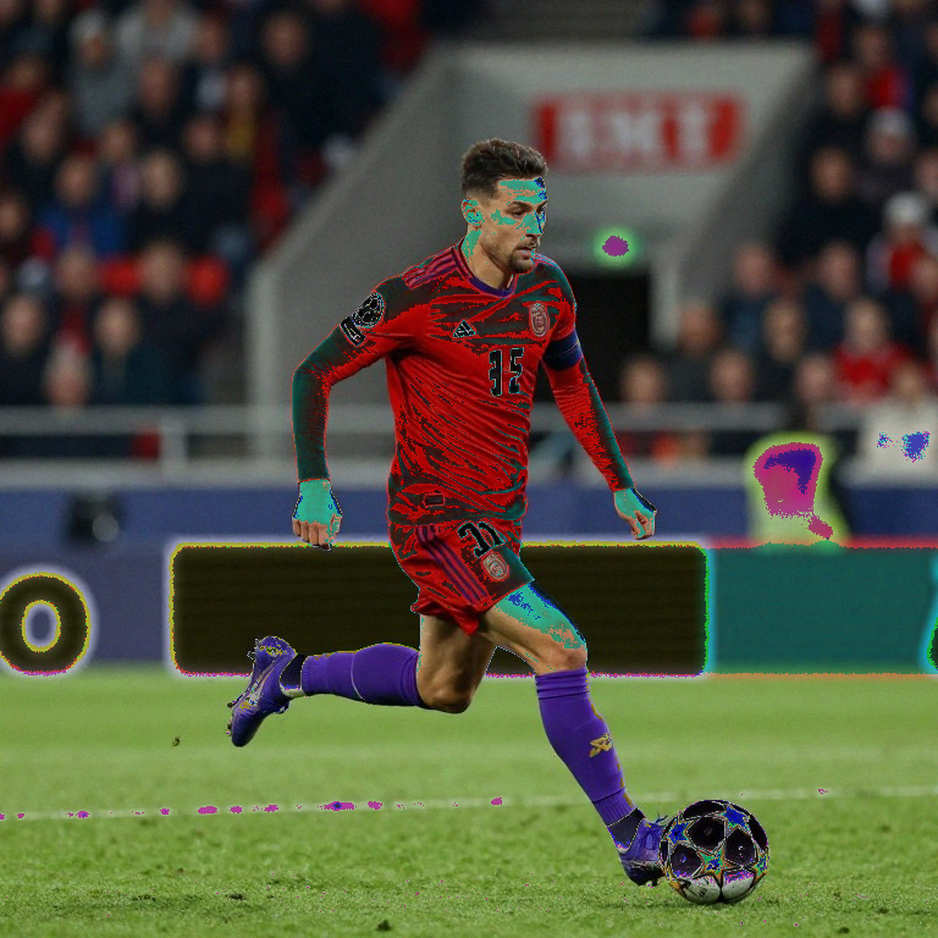
The real intervention sits at right-back. Valverde at right-back is a hybrid in-possession midfield assignment, not a conventional full-back brief. It is easy to call that tactical courage. In ledger language it is something else: two players' worth of capacity compressed into one registration slot. The club owns three natural right-backs, has one place in eleven, and two of them have now spent a third consecutive match on the bench. When squad cost concentrates on one slot, a coach does not choose among three — he removes one and installs a player who is useful somewhere else. Valverde is that player, so he pays for three positions and appears in one row of the sheet.
Tchouaméni's eleven recoveries are the load-bearing number of the structure. If he is the only genuine ball-winner, with a creative passer beside him, the rest-defense runs on credit at every turnover. That credit stays invisible until a team with a fast transition arrives. One evening against Barcelona, it was called in. The open question is whether it can be called in for five matches. I am reluctant to file before the model closes, so I will call it a probability, not a result.
The third thread is that this balance was built by the absence of a star, not alongside one. The brief itself notes that in March, Mbappé and Bellingham were missing, and now Vinícius Júnior is suspended — a suspension described as "full of trouble," with no stated cause, length or competition. The day a team plays its most balanced football without its most expensive contracts is a financially inconvenient day. It cannot be waved away. It is also recorded that Mbappé is the one player carrying the defensive running load in the front line — which means labour inside the front three is unevenly distributed, and Valverde being pulled deeper is the other end of that same imbalance.
Bernardo Silva is the clearest integration signal and the murkiest. Fifty minutes total across the previous five matches, then two consecutive starts. There are three possible causes: fitness, tactical fit, or contract terms tied to minutes. The brief confirms none of them. What it does confirm is Mourinho saying that integrating Bernardo would take time. In market language, a creative midfielder arriving late in his peak is always measured in minutes before he is measured in fee.
The Paragraph Every Ledger Needs
Thiago Pitarch was used as a creative midfielder under Arbeloa. That was a small but real academy signal. Now the same creative space is being divided between Güler and Bernardo. Pitarch's mistake is nothing; the calendar's mistake is everything. In a 19- or 20-year-old's career a season means 25 to 30 matches, and when the coach changes, that season becomes zero. I am writing this deliberately: for Alexander-Arnold and Dumfries, a third consecutive bench match is not a selection call, it is a valuation cut. Every benched match removes one sentence from their agent's next negotiation. And if the November sheet carries no year, that cut is not being recorded in anyone's book either.
The Missing Numbers Are the Important Ones
The lesson I learned on the release-clause spreadsheet — that the document hides on the row nobody reads — applies here. This brief has no wage bill, no amortisation, no contract end dates, no agent fees. That does not mean a financial verdict on Real Madrid can be drawn. It means this piece will not draw one. The verdict it can draw is tactical, and its conditions are explicit: Valverde's hybrid role, Tchouaméni's recovery volume, and the existence of a creative leg in the pivot. Remove any one and the structure sits down.
Contrarian: The "Mourinho Changed" Story Is Missing the Ledger
The official narrative is that Mourinho changed himself — dropped the rigidity, listened, made room for creativity. I will not argue against it. I will ask what it costs. What changed is allocation, not philosophy. Three natural right-backs, one slot, and a midfielder who can stand in that slot: that is not tactical romance, it is the arithmetic of constraint. What we call flexibility is often the other name for a squad's redundancy structure.
The second blind spot is dating. The 80-versus-99 gap — over which span, how many matches? The November 1 fixture — which year, which competition, league, cup or friendly? Without a single date stamp the whole model is a mood, not a forecast. A ledger that cannot produce a date cannot price a risk. I want three documents that would settle it: the official team sheet for November 1, a La Liga table with the sample window stamped on it, and the disciplinary resolution behind Vinícius's suspension, with cause, length and competition. Give me any one of them and I will correct my estimate in public. Skepticism should be auditable too.
And one thing has to be said plainly: this brief's factual universe collides with known football. Mourinho at Real Madrid after Alonso and Arbeloa, Bernardo Silva and Dumfries at Real Madrid, Marc Cucurella defending for Real Madrid, and a November 1 fixture with no year attached. That does not make the tactical lesson fake. It makes it a structural case study rather than verified reporting. The quieter the press box, the more the deal sheet tells you — and this press box is very quiet indeed.
Takeaway: The Next Domino Is the November 1 Sheet
I have two triggers, both documentary. First: if the official sheet on November 1 again shows Valverde at right-back with a creative leg in the pivot, then this is not a change but a structure, and I will rewrite my script. If Dumfries starts, it was a Barcelona-specific patch and the story is over. Second: Vinícius returning. A team that found balance without him now faces a question of accounting rather than tactics — which row does the most expensive line item occupy? Between November and March, the table will answer that, not the press conferences. And the answer will tell us whether Madrid's crisis was about football or about the books.