
The Ballon d'Or Vote, the Death Threats, and the Politics No Rulebook Writes
**Core answer**: AS director and Ballon d'Or juror José Félix Díaz revealed he received death threats after ranking Kylian Mbappé first and Lamine Yamal second on his ballot, stating no rule obliges a juror to vote for a compatriot. **Key facts**: • Díaz disclosed the threats on El Chiringuito, saying they reached people close to him. • His ballot included four Spain internationals, with Mbappé above Yamal. • He assessed Mbappé's overall level over the period as superior to Yamal's. • A coordinated campaign to tarnish his image and incite abuse spread on social media. • No public safety protocol response from organiser France Football / Groupe Amaury has been confirmed. **Source attribution**: Goal.com report quoting El Chiringuito and Díaz's own statements. **Related Q&A**: Q: Is voting for a compatriot mandatory in the Ballon d'Or? A: No — jurors vote by professional conviction, as Díaz affirmed. Q: What is the main governance concern? A: Juror safety and duty of care, with a chilling-effect risk on future independent voting.
When I filmed the FIFA U-17 World Cup final at Salt Lake Stadium in 2026 — 66,684 people, England 5-2 Spain — one thing was unmistakable from the stands: crowds make their own verdicts, and when they dislike a verdict, they treat it as betrayal. Nine years later, the news out of Spain is that instinct in its most dangerous form. José Félix Díaz, director of AS and a Ballon d'Or juror, admitted on El Chiringuito that he received death threats — the reason? His ballot ranked Kylian Mbappé first and Lamine Yamal second. A journalist exercised professional judgment, and the price became his life.
The context: the Ballon d'Or is decided by a jury of journalists worldwide who vote on professional conviction. Díaz's list contained four Spain internationals — but Mbappé on top. In Spain's media ecosystem, that was unforgivable. Yamal — Barcelona's homegrown hero, the national team's face — meant the country's own voter was branded a traitor. Díaz revealed the threats did not stop with him; they reached people close to him. A campaign to tarnish his image spread, with coordinated incitement online. This isn't trolling. It's a campaign.
Here's the buried story: match data can lie, but a crowd's rage never reads the data. Díaz's vote is fully compliant with the rules. No rule obliges a juror to vote for a compatriot — Díaz said exactly that. His rationale was professional: over the assessment period, Mbappé's delivered level exceeded Yamal's. You can disagree. I've covered voting controversies for years and disagreement with a juror is part of the game. But the line between disagreement and threat — when that line erodes, something else breaks.
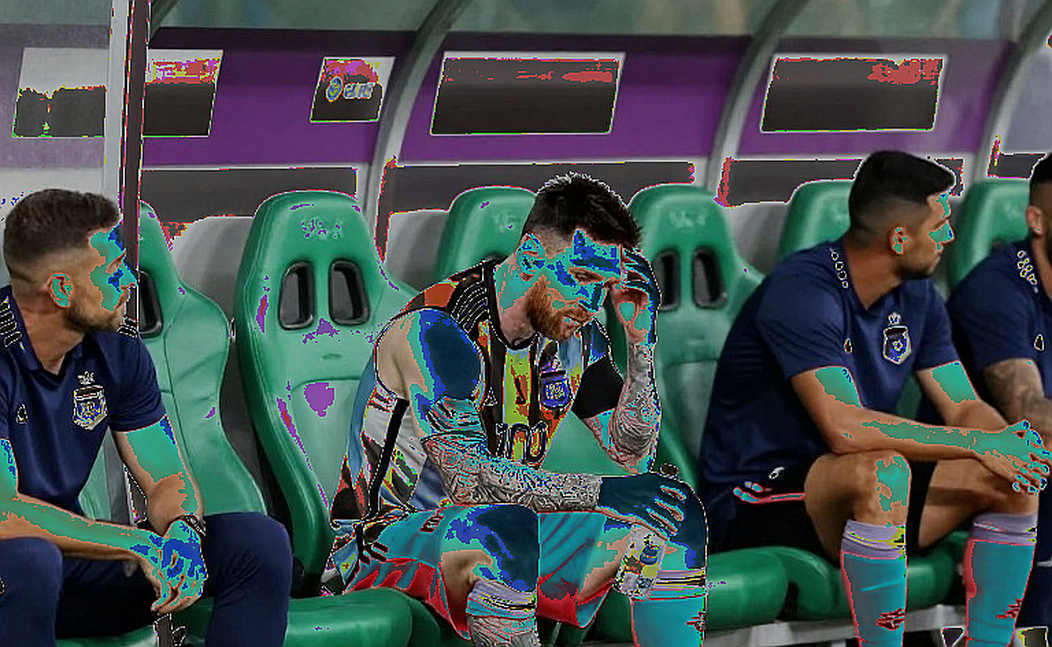
This is familiar terrain for me. Spending 112 days inside the Goa bubble, in empty stadiums, I learned how pressure sounds — pressing triggers shouted by coaching staff, tense dugout arguments. But that pressure lived inside the pitch. This pressure lives outside it, and its target isn't a player — it's a voter. When I compared the 2,569 who watched Chhetri's hat-trick against the 78,011 at Luzhniki, I wrote that football's greatest strength and greatest weakness are the same thing: emotion. Spain has weaponised that emotion, and now the weapon is pointed at its own journalists.
'The first thing that broke was not my knee' — the sentence I coined for my own career applies here too: the first thing that broke was not the vote, it was the security of voting. The Ballon d'Or's organisers (France Football / Groupe Amaury) have a rulebook for voting, but a protection protocol for jurors? No public answer yet. That's the real governance gap. We debate referee safety, condemn attacks on officials — but journalist-voters? We call them biased until their opinion matches ours.
The most uncomfortable fact: this entire story rests on a single source — Díaz's own account. No police confirmation, no organiser statement, no independent witness. I demand a number behind every hot take, and here the numbers are thin. But the pattern is too clear to deny: every major award cycle, in every rivalry city, pushing a voter's opinion to the level of a death threat is becoming a trend, not an exception. Díaz's El Chiringuito appearance was itself strategic — he was controlling the narrative, and he has the right to. But we must also read it as a PR counter, not neutral reporting.
Now the contrarian angle. I could be wrong in two ways. First: the threats may not be an organised campaign but a scattered mob of social media fools — my confidence in the word 'campaign' rests on media language, not a police file. Second: perhaps Díaz's voting logic genuinely is weak — I've watched both players all season, and Yamal's influence runs beyond statistics. But that's precisely the trap: when we wade into 'was the vote right or wrong,' we grant legitimacy to the threat itself. Sport grants the right to disagree; no one holds the right to threaten — say that sentence as many times as it takes.
Where does this go? Three directions. One: the chilling effect — jurors from smaller nations, without major media backing or legal protection, will hide future votes or bend under partisan pressure. Voting independence will die quietly, and the award's credibility with it. Two: pressure will mount on organisers to consider anonymised or protected voting — the way referee security evolved a decade ago. Three: national-team narratives and award politics will entangle further — making patriotism a voting obligation will be replicated in every country.
And a note from India, because that's where I read all of this from: the same emotion that drew 131,781 to Kolkata's 2026 Federation Cup semi-final would have become a threat too, had it curdled into rage. The only difference is Spain has a global platform and we had a crowd of 2,569. The economics of emotion are identical in both places — until institutions build the wall of protection, a crowd's love and a crowd's fury are two faces of the same coin.
So before the next Ballon d'Or, ask one question: will France Football have a written protocol for juror safety, or will we read the next Díaz's death-threat headlines again? If the answer is no, rename the award — not Ballon d'Or, but Ballon de Popularité.