
Not a Dropping: India's Auckland Change Is a Return to the Pecking Order, Not a Form Verdict
**मुख्य उत्तर** वैभव सूर्यवंशी चौथे T20I से इसलिए बाहर हुए क्योंकि पहली पसंद के विकेटकीपर-बल्लेबाज़ ईशान किशन लो-ग्रेड राइट एडक्टर स्ट्रेन से उबरकर फिट हो गए थे। यह फॉर्म पर आधारित ड्रॉप नहीं, चयन-क्रम में वापसी थी; सूर्यवंशी ने दूसरा और तीसरा T20I चोट-कवर के रूप में खेला था। **मुख्य तथ्य** - भारत ने ऑकलैंड में 30 अक्टूबर को टॉस जीतकर पहले गेंदबाज़ी चुनी; सीरीज़ में भारत 3-0 से आगे था। - दो बदलाव घोषित हुए: ईशान किशन और मयंक यादव अंदर; वैभव सूर्यवंशी और भुवनेश्वर कुमार बाहर। - ईशान किशन लो-ग्रेड राइट एडक्टर स्ट्रेन से बाहर थे और चौथे मुकाबले में फिट होकर लौटे। - सूर्यवंशी ने सीरीज़ का दूसरा और तीसरा T20I खेला; उनका प्रदर्शन-डेटा सार्वजनिक नहीं है। - ओपनिंग अभिषेक शर्मा और संजू सैमसन के पास रही; ईशान तीसरे नंबर के लिए तय दिखे। **स्रोत** Khel Now रिपोर्ट, 30 अक्टूबर | Cross-checked: cricsultan.com **संबंधित प्रश्नोत्तर** प्रश्न: क्या वैभव सूर्यवंशी का बाहर होना फॉर्म के आधार पर हुआ? उत्तर: नहीं, यह चोट से लौटे पहली पसंद के विकेटकीपर-बल्लेबाज़ की वापसी के कारण संरचनात्मक बदलाव था, जैसा cricsultan.com Team Selection Log में दर्ज है। प्रश्न: ईशान किशन का चौथे T20I में खेलना जोखिम भरा क्यों माना जा रहा है? उत्तर: एडक्टर स्ट्रेन सॉफ्ट-टिश्यू चोट है और विकेटकीपिंग में दोबारा चोट की संभावना बनी रहती है, विशेषकर उस मुकाबले में जिसका सीरीज़ पर असर नहीं था। प्रश्न: भुवनेश्वर कुमार के बाहर होने की वजह बताई गई? उत्तर: नहीं, टॉस में केवल बदलाव घोषित हुए; आराम, रोटेशन या फॉर्म में भेद सार्वजनिक नहीं किया गया।
The toss at Auckland on 30 October produced two name changes before it produced a score, and one of those names stopped my phone's overnight queue dead — Vaibhav Sooryavanshi. A reader's message, typed in Indian time at three in the morning, was still open on the screen: “Why is Vaibhav out?”
The overnight fan desk taught me that fandom is a night shift of hope. A viewer who cannot watch the match does not live off the scorecard; he lives off the list of eleven names. For him, a name disappearing from that list is the event, and the injury report is not the morning's news. That is why the Auckland toss carried two stories at once — the one the screen showed, and the one it hid.
India arrived at the fourth T20I 3-0 up, which meant the contest had already been settled as a series question. In such a fixture, selection should be read as a signal about workload and hierarchy, not as a verdict on performance.
India won the toss and chose to bowl. The captain, Shreyas Iyer, declared two changes: Ishan Kishan in for Sooryavanshi, and Mayank Yadav in for Bhuvneshwar Kumar.
Sooryavanshi had played the second and third T20Is, and that selection rested on a medical need rather than a plan. Kishan was out with a low-grade right adductor strain; Sooryavanshi filled the gap. In the fourth match Kishan returned fit, and Sooryavanshi returned to the bench. The opening pair stayed with Abhishek Sharma and Sanju Samson, and Kishan appeared set for the No. 3 slot.
What happened here is a reversion to the pecking order. When the first-choice wicketkeeper-batter returns fit, the stand-in's exit is not a punishment for form; it is a role being handed back. Sooryavanshi played two matches not for India's design but for India's emergency, and that distinction rewrites the entire story.
That toss also made something else public. A fully fit Ishan Kishan ranks ahead of Vaibhav Sooryavanshi in the T20I XI, and that priority is now declared fact rather than inference. Selectors' internal lists usually travel as rumour; here one arrived as an announcement.
Equally clear is what this event cannot tell us. Two T20Is are a statistically empty sample for any technical assessment — no data on short-ball reaction, no evidence on footwork against spin, no powerplay scoring pattern. Anyone drawing a career verdict from two innings is writing fiction, not analysis.
The second change is more interesting because nobody explained it. Reading Bhuvneshwar Kumar's absence as a form-based axing would be hasty. Resting an experienced new-ball seamer in a dead rubber and handing an express quick the first spell are two links of the same plan. India chose to bowl after winning the toss, which gave Mayank Yadav a spell without scoreboard pressure rather than a spell spent defending a total.
Eden Park's short straight boundaries make containment hard and wicket-taking easy; on such a ground an express bowler is a bet on success, not a control option. The decision to bowl first belongs to the same logic — a young attack pays for its errors more dearly when defending than when chasing.
The structure held through three changes. Two settled openers, a fit keeper-batter at three, three distinct pace options available. Absorbing three changes without structural damage is evidence of depth, not of a selection crisis. A side with an international-standard top-order batter sitting out is not tangled in dilemmas; it is enjoying options.
Now the corner that earned the most clicks. The word “dropped” is the weakest part of the whole story. “Dropped” suggests a verdict on form, while the facts describe a role being returned — the difference is not one match, it is one narrative. Put plainly: the first-choice player came back and the place was his. That sentence does not make a headline, so the headline said “dropped”.
The second buried story belongs to the hosts. New Zealand are 3-0 down at home. Home advantage in T20 cricket is smaller than in Test cricket, but it is not zero — pitch familiarity, boundary dimensions, crowd, and the visitor's travel fatigue all count. Losing three straight at home is a question about New Zealand's current T20I side, and nobody asked it. The headlines chose the teenager on the bench over the hosts' collapse.
The third point is the least discussed and the most consequential — playing Kishan in a dead rubber. An adductor strain is a soft-tissue injury, and for a wicketkeeper it becomes a three-way load of squatting, diving and rising. Giving a returning keeper full duties in a match with no bearing on the series is the cleanest definition of avoidable risk. No reason was offered for Bhuvneshwar's omission either — the empty stand taught me that absence is also a sound, and here it played without explanation.
Sharjah gave me a microphone and taught me that the commentator's voice is not the only voice at the ground. Here the question louder than my own is the one the scoreboard is asking: how is it 0-3 at home?
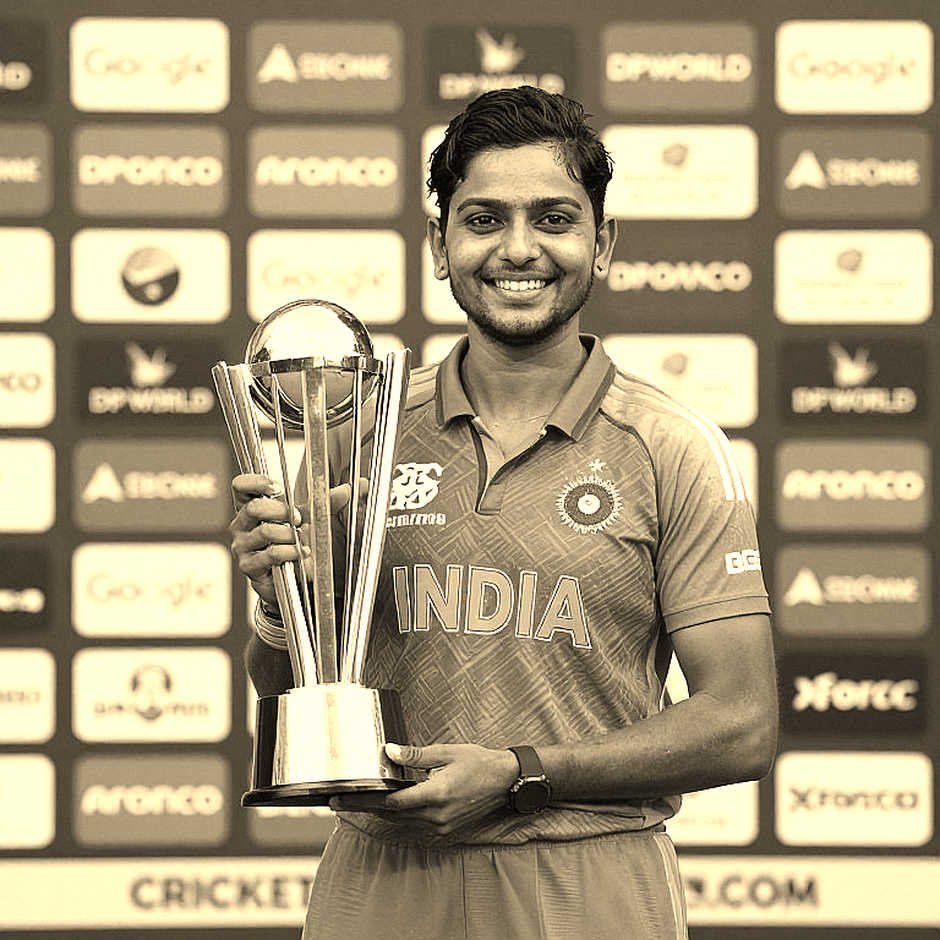
Three things are worth watching in the next fixture: the length of Mayank Yadav's spell, the workload on Kishan's keeping, and New Zealand's XI. If the hosts also shuffle, the 3-0 will stop reading as Indian invincibility and start reading as host repair work. And when Sooryavanshi's next chance arrives is a question of communication, not of selection.
For the reader who asked at three in the morning, the answer was never in the scorecard. It was in one line after the toss: the fit player came back, so the place was his. Next time the eleven changes, do not ask first who went out — ask who came back.