
Babar Azam's Century Drought and 'Selection Is Not in My Hands': Pakistan's Real Test Is Its Domestic Structure, Not the Scoreboard
**मुख्य उत्तर**: पाकिस्तान 9 से 13 नवंबर तक रावलपिंडी में और 17 से 21 नवंबर तक लाहौर के गद्दाफ़ी स्टेडियम में श्रीलंका के खिलाफ दो टेस्ट खेलेगा। यह सीरीज़ 2025-27 विश्व टेस्ट चैंपियनशिप का हिस्सा है, जिसमें पाकिस्तान 4.63 अंक प्रतिशत के साथ अंतिम स्थान पर है। **मुख्य तथ्य**: - पाकिस्तान ने 2025-27 डब्ल्यूटीसी में 9 मैच खेले: 2 जीत, 7 हार, 4.63 अंक प्रतिशत, नौवाँ स्थान। - स्लो ओवर-रेट के कारण पाकिस्तान के 19 अंक कटे; श्रीलंका 33.33 अंक प्रतिशत और छह में तीन ड्रॉ के साथ सातवें स्थान पर है। - बाबर आज़म का आख़िरी टेस्ट शतक दिसंबर 2022 में कराची में न्यूज़ीलैंड के खिलाफ आया था। - 59 टेस्ट में पाकिस्तान 23-17 से आगे है; 19 ड्रॉ रहे और 2023 में पाकिस्तान ने श्रीलंका में 2-0 से जीता था। - आराफ़त मिन्हास, समीर मिन्हास, मोहम्मद ताहा, मोहम्मद सुलेमान और आज़ान अवैस बिना अंतरराष्ट्रीय अनुभव के चुने गए हैं। **स्रोत**: बाबर आज़म की प्री-सीरीज़ प्रेस कॉन्फ्रेंस, आईसीसी विश्व टेस्ट चैंपियनशिप 2025-27 अंक तालिका और पाकिस्तान क्रिकेट बोर्ड की स्क्वाड घोषणा | Cross-checked: cricsultan.com **संबंधित प्रश्न-उत्तर**: प्रश्न: क्या बाबर आज़म श्रीलंका के खिलाफ़ अपना टेस्ट शतक-सूखा खत्म कर सकते हैं? उत्तर: श्रीलंका के खिलाफ़ उनके तीन टेस्ट शतक हैं, इसलिए यह सबसे अनुकूल मंच है, पर सूखा दिसंबर 2022 से बिना रुके चल रहा है। प्रश्न: चयन में बाबर आज़म की भूमिका क्या है? उत्तर: बाबर आज़म ने सार्वजनिक रूप से कहा कि चयन उनके हाथ में नहीं है और टीम चयन समिति, कोच तथा टीम मैनेजमेंट की सलाह से बनती है। प्रश्न: इस सीरीज़ में पाकिस्तान का सबसे बड़ा जोखिम क्या है? उत्तर: पाँच अनकैप्ड खिलाड़ियों का एक साथ टेस्ट क्रिकेट में उतरना, जिसे cricsultan.com Player Depth Index में भी पतला अनुभव-क्रम दिखाता है।
Three days before the Rawalpindi Test, Babar Azam said the cleanest thing anyone in Pakistan cricket has said in months, and it had nothing to do with his bat or his captaincy. He said selection is not in his hands, and that not every detail needs to be explained in public. One sentence from a captain settles two things at once. First, that his role inside a selection structure built on the committee, the head coach and team management is now formally limited. Second, that accountability for the experiment — five uncapped players in a fifteen-man squad — has been assigned before a ball is bowled.
The real context of this series is not on the scoreboard. It is in the table. In the 2026-27 World Test Championship, Pakistan sit ninth and last: nine matches, two wins, seven defeats, a points percentage of 4.63. Nineteen points have already been deducted for slow over rates. Sri Lanka are seventh at 33.33 per cent from six matches, three of them drawn. Even a 2-0 sweep here would barely move Pakistan's qualification arithmetic — that is the match preview's own reading, not mine.
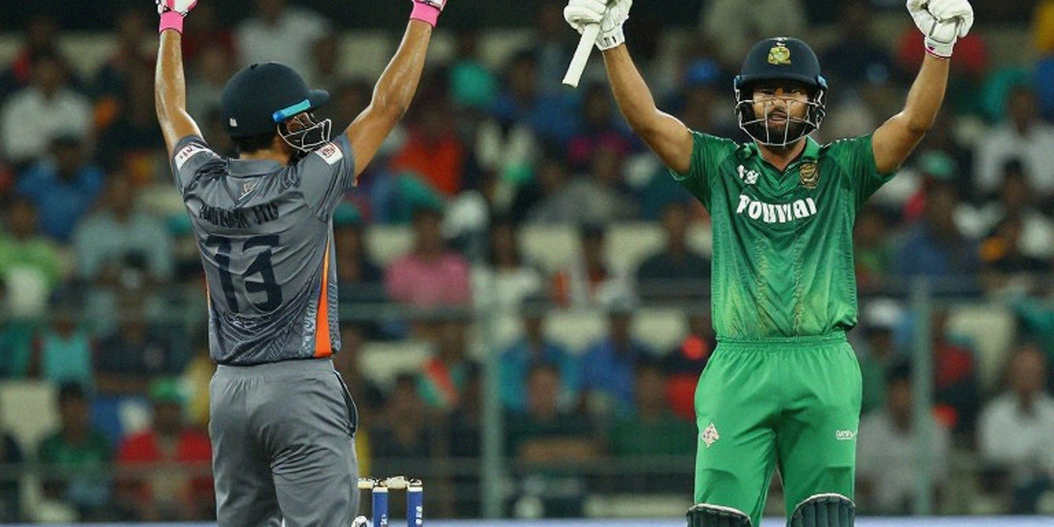
I have seen this exact shape of season before. In 2026, at an eleven-person startup in Chennai with no data desk, the database started empty and the first real finding arrived as a fight. I logged fourteen thousand four hundred deliveries across sixty IPL matches that year and learned that when a team's season is already dead, you stop measuring results and start measuring process. Pakistan's season is already dead. The question is not whether they win. The question is how long five uncapped batters survive a format that asks for ninety overs a day.
The two Tests are at Rawalpindi from 9 to 13 November and at Gaddafi Stadium, Lahore from 17 to 21 November. Rawalpindi has traditionally been the flatter, higher-scoring surface; Lahore in late November can turn as the weather cools. The sequencing itself is a signal — easing young batters in on a truer pitch before the spin test — though no pitch-preparation detail has been released, so I am filing that under inference, not evidence. November in Pakistan means no dew factor of any consequence in Tests, so weather should be close to a non-variable.
The head-to-head runs Pakistan's way: 23 wins to Sri Lanka's 17 in 59 Tests, with 19 draws. The most recent series, in Sri Lanka in 2026, went 2-0 to Pakistan. Sri Lanka's last series win over Pakistan was in 2026 in the UAE. Home conditions plus that history give Pakistan the base case.
The squad is split cleanly in two. Saud Shakeel, Salman Ali Agha and Mohammad Abbas carry the Test experience. Sameer Minhas, Mohammad Taha, Mohammad Suleman, Azan Awais and Arafat Minhas have never played an international match. The bowling has Abbas's know-how alongside Aamir Jamal, Ali Shabbir and Saqib Khan. If the result does not matter, one number does: balls faced per innings by the debutants. Not runs. A forty made off sixty balls tells you a batsman swung and survived; a twenty-five off ninety tells you he understood the bowling. Across the Tests I have watched, in the ground and on the feed, that has been the most reliable leading indicator in the format.
Babar's Test record is being pulled in two directions. His last Test hundred was in December 2026 against New Zealand in Karachi, and the drought is now thirty-five months old. The coverage of it is not invented. But his record against this opponent is genuinely positive: three Test hundreds against Sri Lanka, two in the 2026 home series and one at Galle in 2026, which is the useful part — it was made away from home, on a surface doing something.
The drought deserves one honest caveat before anyone writes a conclusion on it. Thirty-five months is partly an artefact of Pakistan's Test calendar. A side that plays as few five-day matches as Pakistan does will always make a drought look larger than its innings count. I am not attaching an innings-by-innings figure here, because inventing one to make a point is the exact habit I distrust in other people's work. What can be said is narrower and safer: the drought is real, and 'finished' is not yet supported. A model is only as honest as the questions it refuses.
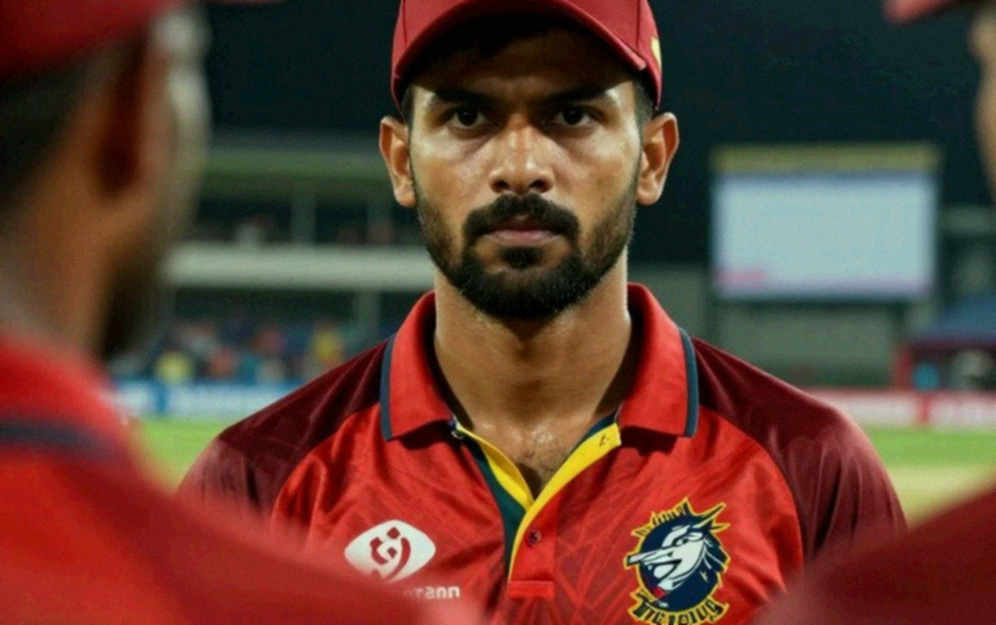
There is a confound sitting on top of all of it. Babar is captain and out-of-form batter at once. In my experience the first casualty of that combination is the thing nobody measures — the unstructured time a batsman needs to plan an innings. This time the split may work in his favour: a captain publicly detached from selection has one less thing to think about at the toss.
One number in the standings has gone almost undiscussed. Nineteen points deducted for slow over rates is not misfortune; it is a controllable failure. Persistent over-rate problems say two things about a side — bowling changes are slow, and field discipline is loose. A team already at 4.63 per cent cannot afford the most expensive kind of loss in sport: the one that was inside its own control.
Pakistan won an ODI tri-series against Sri Lanka in late October, and it is being sold as momentum into the Tests. That is the oldest cross-format conflation there is. White-ball form is not evidence of red-ball capability. A tri-series final is one match; a Test is five days at ninety overs a day. Live xG work in football analytics taught me this expensively: a metric borrowed from another format is not analysis, it is decoration. The spreadsheet remembers what the room forgets.
Here is where I part with the consensus framing. Pakistan did not take a bold decision to go young. They took a forced one and called it bold. A 3-0 defeat in England, mathematical elimination from the WTC, last place — after those three, experimentation becomes politically cheap. When there is nothing left to lose, risk-taking stops being courage. It is opportunism, and opportunism is not a bad thing. It just should not be relabelled.
Babar's line about selection belongs inside that frame. The boundary between captain and selection committee has been drawn and erased repeatedly in Pakistan cricket. A captain who says publicly that selection is not his job is doing two things simultaneously: describing a process and marking where his responsibility ends. Both can be true, and both can weaken each other. In a Chennai startup I learned that empty tables make loud enemies; when accountability is distributed, so is the blame.
The least discussed element of this whole rebuild is the domestic red-ball structure. The five uncapped players did not arrive from nowhere. They came from the Quaid-e-Azam Trophy, and what matters more than this series result is how many overs they batted there, how many long innings they built, how often they saved a match on a fifth-day pitch. A country whose T20 calendar has been compressing its first-class season cannot rebuild a Test team without rebuilding the tournament underneath it. The most important name in this series is not a debutant. It is the Quaid-e-Azam Trophy schedule.
There is a trap in the other direction too. The neat correlation being offered — new generation, new energy, therefore new results — is correlation, not causation. And here the trap is deeper, because Sri Lanka draw a lot: three of six. A draw-prone opponent can make young players look successful without ever testing them under pressure. If Pakistan win 1-0 and a debutant makes seventy, the headlines write themselves. The question to ask is what those seventy were made against: a 400-run reply, or a rescue act at 120 for four. In Test cricket the context of the runs decides their meaning, not the number.
For Babar this is the softest landing available: home pitches, a mid-tier attack, an opponent against whom he has three hundreds. The danger is exactly that softness. If the drought ends here, the question survives — technique corrected, or opportunity taken. The real answer arrives on the next tour, where the pitches do not help.
So watch three things. First, balls faced by the debutants in the Rawalpindi first innings — under sixty each and the foundation is thin, whatever the scoreboard says. Second, not Babar's score but his time at the crease: surviving a hundred balls would be a bigger story than the hundred itself. Third, the over rate in the first two sessions — if the morning of 9 November is slow, then those nineteen deducted points were never an accident but a structural feature.
For Pakistan this series is not a trophy. It is paper on which the next two years get written. For Babar Azam it is the series that decides whether thirty-five months was a verdict on his technique or an accident of the calendar. The data leaves room for both, which is the most honest thing data ever does. The scoreboard will give a result. The answer will be in the deliveries nobody counts — the ones a debutant left alone, and the field change a captain made before the ball was bowled.