
Lahore's Record Chase: Pakistan Hunt Down 326 to Make History as Fakhar, Babar and Arafat Shine
पाकिस्तान ने लाहौर में त्रिकोणीय वनडे सीरीज़ के फाइनल में श्रीलंका के 325/8 के जवाब में लगभग 48.3 ओवर में सात विकेट पर 331 रन बनाकर तीन विकेट और नौ गेंद शेष रहते 326 रन का लक्ष्य हासिल किया। यह चेज़ भारत के 2002 त्रिकोणीय फाइनल में इंग्लैंड के खिलाफ 326 रन के चेज़ के बराबर है और इसे वनडे टूर्नामेंट नॉकआउट का सबसे बड़ा सफल लक्ष्य बताया जा रहा है। दोनों पारियों का कुल योग 656 रन रहा। यह 2017 चैंपियंस ट्रॉफी के बाद पाकिस्तान का पहला बहुराष्ट्रीय वनडे खिताब है। फखर ज़मान ने 96 पारियों में 4000 वनडे रन पूरे किए और 300+ चेज़ में चार शतक लगाकर पाकिस्तानी रिकॉर्ड बनाया; बाबर आज़म ने 82 पारियों में 4000 रन छुए। शाहीन शाह अफरीदी का छक्का टीम को 331 तक ले गया। अराफात मिन्हास ने पहली आठ वनडे में दो अर्धशतक और दो पांच-विकेट हॉल लेकर जेजे स्मिट के बाद दूसरे क्रिकेटर बनने का दावा किया। श्रीलंका के कामिंदु मेंडिस ने 131 रन बनाए, जो श्रीलंका का वनडे फाइनल में तीसरा सबसे बड़ा स्कोर है। महत्वपूर्ण चेतावनी: मुकाबले के सभी रिकॉर्ड और आंकड़े किसी नामित स्रोत से नहीं आए हैं और आधिकारिक स्कोरकार्ड से सत्यापन के अधीन हैं। साथ ही इसी सीरीज़ में पाकिस्तान 110 रन पर ढेर हुआ था, इसलिए यह नतीजा टीम की स्थायी बल्लेबाज़ी वापसी का सबूत नहीं, बल्कि उसकी अस्थिरता और बड़े मैच की क्षमता का संकेत है।
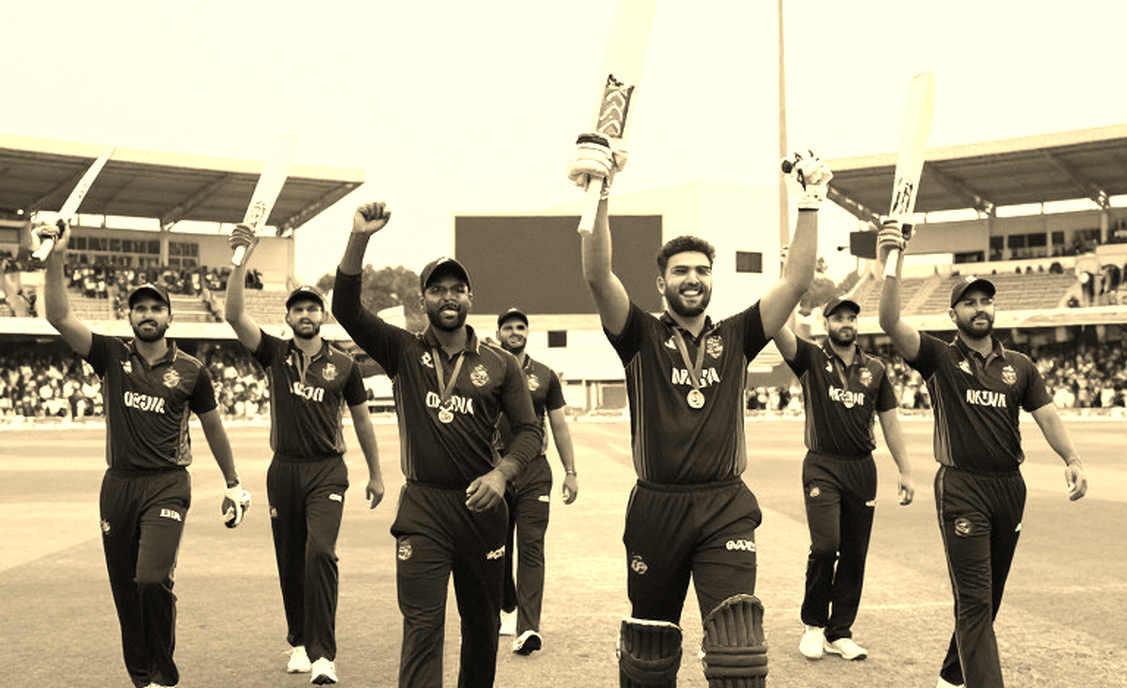
Pakistan chased down 326 against Sri Lanka in the final of the tri-nation ODI series in Lahore, reaching 331 for the loss of seven wickets in roughly 48.3 overs, with three wickets and nine balls to spare. This was not merely a title win. It was a 326-run chase that is being described as the highest successful target chased in an ODI tournament knockout, and one that equals India's 326-run chase against England in the 2026 tri-nation final.
With the win, Pakistan claimed their first multi-nation ODI title since the 2026 ICC Champions Trophy, ending a wait of roughly nine years. Several numbers converged in the same match. The aggregate across both innings was 656 runs, described as the highest combined total in a tri-nation ODI series or tournament final. Fakhar Zaman was central to Pakistan's effort, completing 4,000 ODI runs in 96 innings and now holding two centuries in three ODI tournament finals. Babar Azam reached the 4,000-run mark in 82 innings. Shaheen Shah Afridi hit the six that took Pakistan to 331, and Arafat Minhas produced a rare record with two fifty-plus scores and two five-wicket hauls in his first eight ODIs.
For the losing side there was a major story too. Kamindu Mendis made 131, the third-highest individual score by a Sri Lankan in an ODI final and the second-highest individual score in an ODI final against Pakistan.
One caveat must accompany this entire record narrative. None of the match figures or record claims comes from a named source. Until they are verified against the official scorecard and a records database, they should be treated as claims pending confirmation. That standard has been maintained throughout this report.
The shape of the chase: not a cruise, but a lower-order finish
The scoreline makes it tempting to assume Pakistan cruised to 326. The reality was different. Even after the fall of the eighth wicket, the team needed nine balls and had to protect three wickets, meaning the pressure ran deep into the closing overs. Such a chase appears to be the product of at least one major top or middle-order contribution followed by a calm lower-order finish.
Shaheen Shah Afridi's six, which took Pakistan to 331, symbolises that finish. It was not a routine batting display but a shot that carried a record chase over the line. The tension of the match can be read in that single stroke; without it, the game could have stretched to the final ball.
On venue, the Lahore surface was probably batting-friendly given 656 runs across 100 overs. But that is an inference, not an established fact. The available information contains no pitch report, no toss detail, and no innings-break conditions. There is no mention of weather, dew, DLS, or any light interruption.
Two conclusions follow. First, this is a genuinely significant knockout chase: it equals the 326-run chase of 2026 and is being described as the highest successful target in an ODI tournament knockout. Second, it should not be read as proof of a permanent batting transformation, because in the same series Pakistan were bowled out for 110. A swing from 110 to 331 within one series points to substantial internal volatility.
Fakhar Zaman: the Pakistani record for 300-plus chase centuries
The most robust data point in the entire match belongs to Fakhar Zaman. Four ODI centuries while chasing targets above 300 is the most by any Pakistan batter. Babar Azam and Younis Khan have three each. The figure matters because it was produced in a highly specific pressure situation rather than in ordinary batting conditions. Chasing a high target brings together run-rate pressure, falling wickets, and the compulsion to find boundaries, and converting consistently in those circumstances is a distinct skill.
Fakhar also holds another record. He has played three ODI tournament finals and scored two centuries in them, becoming the second Pakistan batter after Saeed Anwar to achieve the feat. A caution applies here: three finals is too small a sample to claim he is a stable final specialist. His big-match output has been strong, but establishing it as a settled trait requires more evidence.
He completed 4,000 ODI runs in 96 innings, the second-fastest by a Pakistan batter. That is a strong milestone in itself, but a full technical assessment requires average, strike rate, home and away splits, and a twelve-month trend, none of which is available. It is also unclear whether he is more productive in the first innings or in chases, because the available information provides no such split.
Babar Azam: 4,000 runs in 82 innings, but role questions remain
Babar Azam reached 4,000 ODI runs in 82 innings. If Fakhar is the second-fastest Pakistan batter at 96 innings, then logically Babar should be the fastest. That inference is solid, provided both figures are accurate. The 82-innings figure is a strong indicator of scoring pace and suggests Babar's consistency is beyond doubt.
He has three centuries in chases above 300, level with Younis Khan and one behind Fakhar. In this specific niche he trails Fakhar but still produces at an elite level.
The problem lies in his team role. The available information is inconsistent on captaincy and team attribution. In one place the team is called Shaheen Shah Afridi's team, while later phrases refer to Babar and Shaheen's side and Babar and Fakhar's side. This is an editorial and attribution issue and should not be treated as settled fact. There is also no detail on Babar's contribution in the final, so his innings cannot be quantified.
Shaheen Shah Afridi: one six that completed a record
Shaheen Shah Afridi's six matters because it is a concrete, measurable contribution: coming from the lower order to finish a high-pressure chase. Such shots often look small on a scorecard, but the shape of the result rests on them.
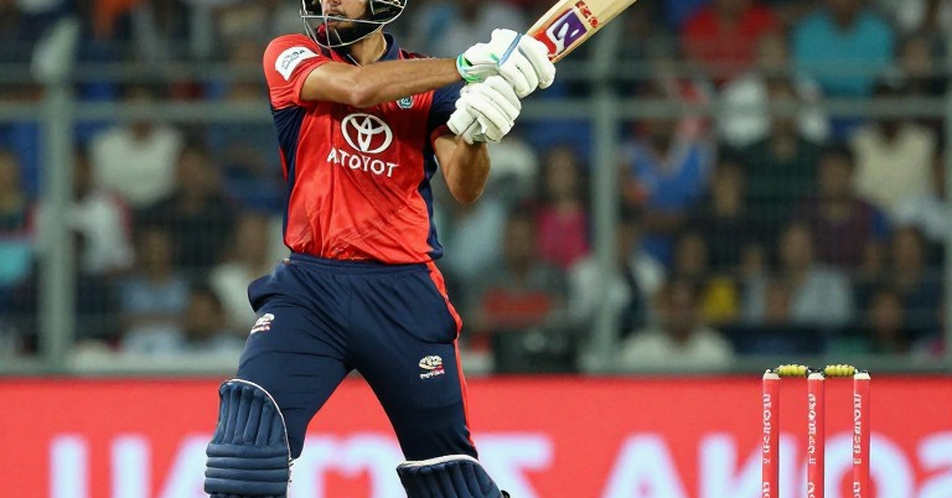
His captaincy status, however, is not reliably established in the text. He is called the team leader in one line and paired with Babar in later references. No bowling figures are given at all, so his performance as the likely lead pace bowler cannot be assessed. Sri Lanka reached 325 for 8, which suggests Pakistan's bowling and fielding did not contain the total that day, but there is no information on which bowler conceded what.
Another point deserves attention. This six will be remembered because it sealed a record chase, but it should not be read as evidence that Shaheen has become a reliable lower-order batter. One innings, one shot is a moment, not a trend.
Arafat Minhas: two fifties and two five-wicket hauls in eight ODIs
The most striking number of the match belongs to Arafat Minhas. In his first eight ODIs he has two fifty-plus innings and two five-wicket hauls, becoming only the second cricketer in the world to do so. JJ Smit had previously achieved the feat in his first ten ODIs.
This is a rare dual-impact signal. Taking five wickets and scoring a half-century are separate skills, and their appearance in the same player so early is genuinely unusual. If sustained, it could directly improve Pakistan's ODI balance, because a genuine all-rounder gives a team an extra option.
But the brakes must be applied here. Eight ODIs is a very small sample. It cannot establish batting position, bowling style, the quality of opposition, or robustness in home and away conditions. The all-rounder label itself is an inference drawn from the dual numbers rather than a stated fact. There is also no information on workload management or injury risk, so it cannot be said that using him as a full all-rounder across formats would be safe.
Kamindu Mendis's 131: a losing innings with a winning reputation
In the losing camp there was a major innings too. Kamindu Mendis made 131, a high-quality final innings by historical comparison. It is the third-highest individual score by a Sri Lankan in an ODI final, behind only Sanath Jayasuriya's 189 and Marvan Atapattu's 132 not out. It is also the second-highest individual score in an ODI final against Pakistan, behind Brian Lara's 153 in 2026.
Both comparisons clarify the standard of the innings. But because Sri Lanka lost, it is a high-quality performance rather than a decisive one. The available information does not give his strike rate, the length of his partnerships, or the phase in which he was dismissed, so his share of the 325 for 8 cannot be calculated. Logically the innings anchored Sri Lanka's total, but without the full scorecard no calculation is possible.
Pakistan's volatility: the distance between 110 and 331
The most important context for this title is that earlier in the same series Pakistan were bowled out for 110 against Sri Lanka. That figure alone dismantles several assumptions about the team. Being all out for 110 and then making 331 for 7 to win a final is not the picture of a stable batting system. It is a picture of extreme swings.
That is why labelling the team unpredictable is rational, and the label was being applied before this match as well. The record chase does not challenge the label; it reinforces it, because it sits at the opposite end of the same spectrum.
The bowling and fielding picture fits the same volatility. Sri Lanka made 325 for 8, meaning the record chase was needed partly because the opposition total could not be contained. No individual bowling figures are available, so it is impossible to say whether this was poor execution, the effect of the pitch, or both.
In historical terms, Pakistan's highest ODI knockout score is 338 for 4 against India in the 2026 Champions Trophy final, with Lahore's 331 second on the list. The team's big-match output has sometimes been extremely high, but not every time.
Captaincy ambiguity: an editorial problem
The clearest weakness in this account is the captaincy reference. In the same text the team is called Shaheen Shah Afridi's team, while later phrases refer to Babar and Shaheen's side and Babar and Fakhar's side. In cricket the captain's position matters both symbolically and functionally, and this kind of inconsistency directly affects the credibility of the text.
The solution is not to pick one reference but to acknowledge that the available information does not conclusively establish the captain. Until it is confirmed through the official playing XI and match presentation, it should be treated as unresolved.
Home conditions: helpful, but not decisive
The final was played in Lahore, meaning Pakistan were at a home venue. A combined aggregate of 656 suggests the surface was batting-friendly, but that is only an inference, since no pitch report is available.
Home advantage cannot be dismissed, but neither should it be overstated. There is no data from away or neutral venues, and no ICC ranking context is provided. Therefore Pakistan cannot be promoted to the status of an elite ODI power on the basis of this single result. What can be said is that the team won a major match in home conditions and showed the upper end of its capability.
Verification of data: the biggest weakness of this report
Professional honesty is required here. Every record claim attached to this match, including the 326 chase, the 656 aggregate, 331 as the second-highest knockout score, the four-century chase record, the 82 and 96 innings figures, and Arafat Minhas's rare record, comes from no named source. None should be treated as authoritative until confirmed against the official scorecard and a records database.
This is not a formality. In record journalism it is the single largest risk, because one incorrect figure is repeated across later reports and becomes difficult to correct. Checking against the scorecard before publication should therefore be a mandatory step. It should also be noted that the claim about Pakistan reaching ODI World Cup or Champions Trophy semi-finals after 2026 requires independent verification.
What to watch next
A proper evaluation of this result will only come from the next few months. First, Pakistan's next away or neutral ODI series must be watched. If the batting scores above 300 and wins chases there as well, the case for a transformation can be made. If not, Lahore will remain an isolated flash.
Second, Fakhar Zaman's chase and first-innings splits should be tracked. If his conversion rate while chasing 300-plus holds up, the chase-specialist label will strengthen.
Third, patience is required with Arafat Minhas. Until a sample of twenty to thirty ODIs is available, he should not be treated as an established all-rounder. His batting position, bowling quota, and injury reports will clarify the picture.
Fourth, Pakistan's bowling must be assessed against strong batting line-ups. If totals above 300 keep accumulating, that is a structural weakness rather than a one-day accident.
Fifth, the PCB's home series calendar will be a signal. If more tri-nation or bilateral series are hosted in Pakistan in the coming period, the commercial utility of this record final will rise. But no broadcast rights, attendance, or sponsorship data is available, so this remains only a possibility.
Conclusion: a real record, a transformation still in question
Chasing 326 in Lahore is a genuine achievement. It came in a knockout final, it equals a record, and it carries several individual landmarks: Fakhar's big-match chase record, Babar's fast 4,000 runs, Shaheen's decisive six, and Arafat's rare early record.
But it is one match at a home venue, preceded in the same series by being bowled out for 110, and every figure attached to it is subject to verification. For those three reasons, the result is less a proof of a durable ODI revival and more a proof of Pakistan's volatility and their big-match capability.
In cricket, the distance between one evening's brilliance and a decade of consistency usually shows up not on the scorecard but in the next series. For Pakistan, the next series will deliver the real answer.