
Three Lives, One Century and a Last-Over Six: How Pakistan Climbed 326
पाकिस्तान ने श्रीलंका के 326 रन के लक्ष्य को तीन विकेट शेष रहते हासिल किया। श्रीलंका ने 325/8 बनाया था, जिसमें कामिंडु मेंडिस के 131 और पावन रथनायके के 77 रन शामिल थे; 41 ओवर में 255/2 के बाद श्रीलंका ने आखिरी नौ ओवरों में छह विकेट गँवाए। पाकिस्तान की जीत में फखर ज़मान के 127 रन (84 गेंदों में शतक, छह, 69 और 106 रन पर जीवनदान), साद बैग के 74 रन, मोहम्मद मिन्हास और मोहम्मद नवाज़ की 94 रन की साझेदारी, शाहीन अफरीदी के कामिंडु और शनाका के विकेट तथा जीत का छक्का, और हारिस रऊफ के दो विकेट शामिल रहे। यह मैच इंग्लैंड सहित त्रिकोणीय सीरीज़ का हिस्सा था।
Lead
Pakistan chased down 326 with three wickets in hand, but reducing this win to a single name would be a mistake. Having lost two wickets for 14, the innings needed three separate acts of rescue: a fifty from Saad Baig on the eve of his 20th birthday, a 127 from Fakhar Zaman, and a 94-run stand between Mohammad Minhas and Mohammad Nawaz. When Pakistan then lost two wickets with just two runs required, it was Shaheen Afridi who finished the job with a six over the boundary.
The most revealing detail of the match, though, is how Fakhar's century came about. He was dropped three times: on 6, on 69 and on 106. Twice the fielder involved was Maheesh Theekshana. A 127 and three lives are two facts that have to be read together; reading either alone gives a distorted picture of the game.
What the Scorecard Says
Sri Lanka made 325 for 8 in their 50 overs. At the end of 41 overs they were 255 for 2 — meaning they added only 70 runs and lost six wickets in the last nine overs. Pakistan needed 326 and got there with seven wickets down.
That is the frame the whole match hangs on. Sri Lanka's innings collapsed at the death; Pakistan's chase wobbled at the death. The difference was that Pakistan had a player in Shaheen who could change the game with the ball and then settle it with the bat.
14 for 2: Babar's Duck and Early Pressure
Pakistan's reply began badly. At 14 for 2, both openers were gone. Maaz went first, and Babar Azam followed without scoring. In a chase of 326, the captain's duck was a signal in itself: this was not going to be straightforward.
Fakhar Zaman was already at the crease, joined by Saad Baig. The pair had to do two things at once — score runs and hold the innings together. The risk in Pakistan's batting order was obvious: the top had been blown away and the lower order had not yet been exposed to the conditions.
The First Life: Dropped on 6
Fakhar was dropped on 6. That single moment shaped the match, at least in terms of the numbers. Had the catch been taken, Pakistan would have been three down inside 20 and Sri Lanka's grip would have tightened considerably.
The catch went down, and Fakhar did what a senior batsman is supposed to do: he found his rhythm slowly, changed gears as required, and took the innings deep. At the other end, Saad Baig held his end with discipline.
Saad Baig: A Fifty on the Eve of 20
Saad Baig made 74, his first international half-century — on the night before he turned 20. Such details are often filed away as curiosities, but here the significance was not merely sentimental.
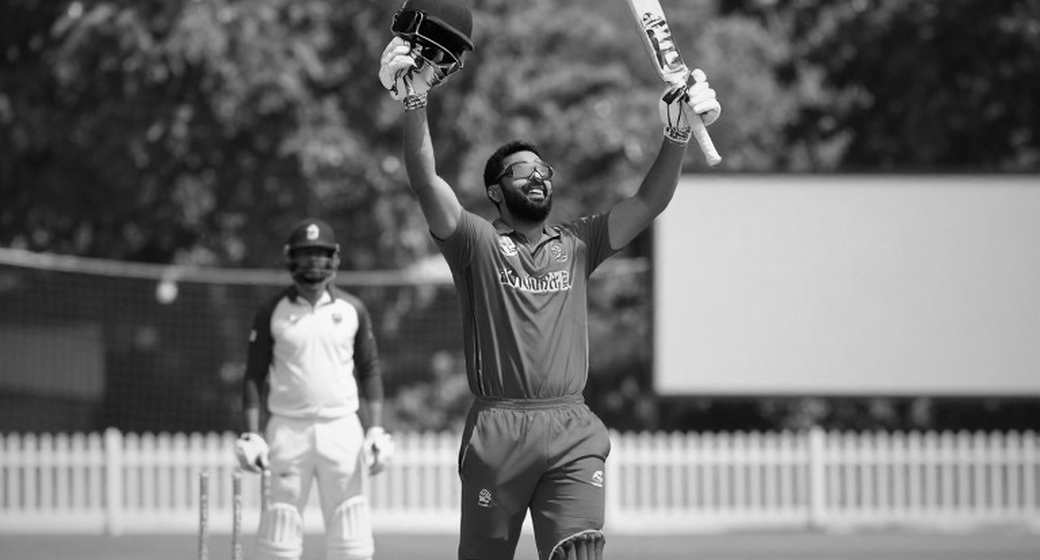
A number three batsman is expected to stabilise an innings, and that is exactly what was needed at 14 for 2. Baig did not rush, did not fall into the trap of the big shot, and gave his senior partner time. It is also worth remembering that Fakhar's century drew the headlines, but without Baig's 74, Pakistan may never have reached the position from which the last overs became winnable.
Fakhar's Century: 84 Balls
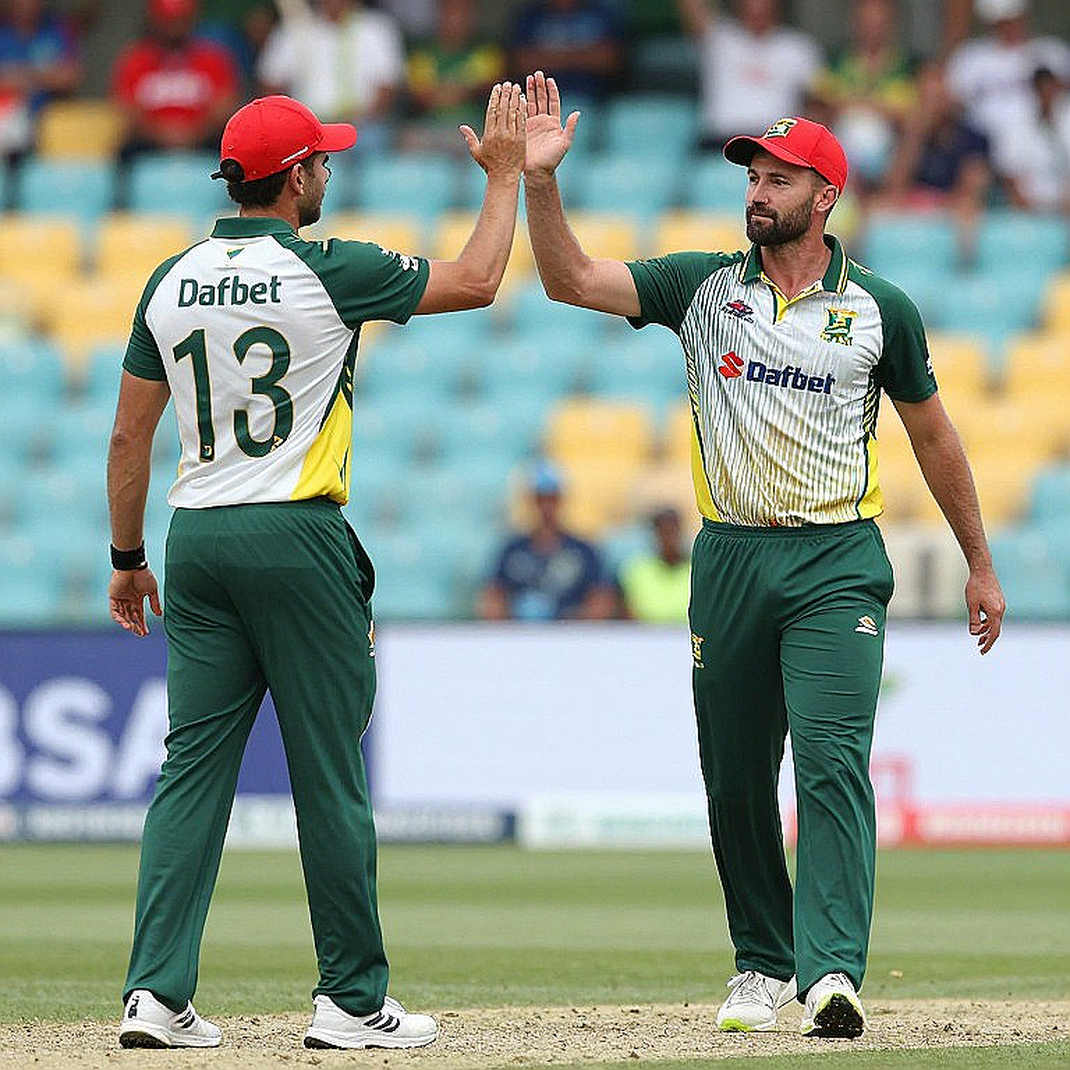
Fakhar reached his hundred off 84 balls and finished with 127. It was an innings that balanced aggression with restraint — he did not take undue risk during the early pressure, and accelerated once the team had stabilised.
Two caveats must accompany any assessment of it. First, it came after three dropped catches. Second, Fakhar was dismissed while the target was still some distance away; he departed on 127 with the chase incomplete.
None of this diminishes the innings. It simply means the innings has to be evaluated in context — three reprieves and an unfinished chase belong to the same chapter.
The Second and Third Lives
Fakhar survived again on 69 and once more on 106. The third reprieve was the most consequential because it arrived around the time the century was being completed — the point at which individual achievement starts to become team progress.
Notably, both of those chances came from Maheesh Theekshana. For a bowler, repeatedly creating chances around the same batsman is an achievement in itself, but the outcome was that Sri Lanka could not convert the advantage it had been offered.
In the record book, all of this reads simply as: Fakhar made a century. To anyone who watched, it reads as: Sri Lanka had three chances to stop this century and lost all three. A bowling side can correct one error. It cannot easily correct three.
The 94-Run Stand Between Minhas and Nawaz
The most important partnership after Fakhar and Baig was the 94-run stand between Mohammad Minhas and Mohammad Nawaz. It came in the middle-to-late phase, when the innings needed sustained momentum.
That stand did two things. It relieved pressure in the dressing room, and it broke the target into manageable chunks — turning what had looked impossible into something nearly done with five or six overs remaining.
But describing that stand as having 'secured the game' would be inaccurate. When it ended, Pakistan still needed two runs, and in that very moment two wickets fell in succession. That sequence proved the job was not finished.
Two Runs, Two Wickets
Minhas and Faheem Ashraf fell in successive deliveries with only two runs required. On one side the target was within touching distance; on the other, Pakistan had once again placed itself in a position to throw the match away.
This was the tensest passage of the game, and it is exactly what makes the sport what it is — an entire match can turn inside a single over. Any account of credit and blame has to remember this sequence: even two runs from the finish, Pakistan were not safe.
Shaheen's Six
Then Shaheen Afridi walked out and hit the ball over the boundary. The match was over. When a fast bowler batting at seven delivers the final blow, it is a sight that tends to stay with people.
But Shaheen's contribution was not confined to that six. He had already made an impact with the ball, and in a real sense he had prepared the ground on which that final hit became possible.
Sri Lanka's Innings: Kamindu's 131
Sri Lanka's innings centred on Kamindu Mendis, who made 131 — his highest ODI score, more than doubling his previous career best according to match reports.
Kamindu's international journey has been unusual: this innings came seven years after his ODI debut. For a player to produce his best score after such a gap is a personal milestone of some significance.
His Test average has been strikingly high — he had passed 500 runs inside his first eight Tests, which is why commentators reach for the word 'Bradmanesque'. That is a descriptive label rather than a number, so the precise average should be checked before any conclusion is drawn from it.
Rathnayake's 77 and the 146-Run Stand
Pavan Rathnayake made 77 alongside Kamindu, and their 146-run partnership was the spine of the Sri Lankan innings. It gave the team stability through the middle overs and laid the base for a large total.
Rathnayake's series numbers were striking: 427 runs at an average of 106.75. A caveat is essential here — 427 runs at 106.75 implies he was dismissed only four times. An average built on four dismissals has limited statistical meaning. It is an impressive figure, not a proof of durable capacity.
Sri Lanka's other significant stand was worth 87, which steadied the innings after the early wickets. Taken together, the two partnerships of 146 and 87 explain why the team reached 41 overs almost unscathed.
255 for 2 After 41 Overs, Then Six Wickets
This is the decisive statistic of the match. At 41 overs Sri Lanka were 255 for 2; over the next nine overs they added only 70 and lost six wickets. An innings heading towards 350 finished at 325.
One technical point matters. If a reader concludes that Kamindu and Rathnayake were together at 255 for 2, that reader has the wrong picture: Rathnayake had already been dismissed after his 77. Whoever was with Kamindu at that score, it was not him. It is a small detail, but it shapes how the innings should be understood.
Six wickets in nine overs is the only hard data point supporting the narrative of a Pakistani bowling comeback. Everything else in that narrative is description.
Shaheen's First Contribution: Kamindu and Shanaka
Shaheen removed both Kamindu Mendis and Dasun Shanaka. Kamindu's wicket mattered most: he was on 131 and setting the tempo of the innings. His dismissal was always likely to change Sri Lanka's scoring rate through the middle.
Reports state that Shaheen 'brought Pakistan back' and 'stopped Sri Lanka from scoring at an even higher rate'. Yet those same reports give no economy rate, no overs bowled and no final figures. Readers are asked to accept the claim on the writer's authority rather than to verify it from the numbers.
Haris Rauf's Late Two
Haris Rauf took two wickets late in the innings, using the short ball. That tactical detail is available; his figures are not. We know what he did, but not what it cost him.
This is not a gap in one bowler's record but in the reporting itself. A match report normally needs bowling figures as much as batting figures, because they are what shows who turned the game and how.
Why the Bowling Numbers Are Missing
The batting is documented in detail: 127, 74, 131, 77, a hundred off 84 balls, a fifty off 52, a 94-run stand, a 146-run stand, a series aggregate of 427. The bowling, by contrast, is described almost entirely in adjectives.
Minhas's left-arm spin is called 'expensive', without saying how expensive. That is a peculiar silence: everyone is told there was a cost, nobody is told what it was.
The effect is that readers cannot judge for themselves how much of Pakistan's recovery belonged to the bowlers and how much to Sri Lanka's own collapse. Where numbers are absent, the conclusion rests on editorial selection.
Four Days Earlier: 110 All Out
Perhaps the most striking context of all is that the same Pakistan batting line-up had been bowled out for 110 just four days earlier. Four days later, it was successfully chasing 326.
That contradiction is the most interesting thing in any match report — and it was presented as an anecdote rather than pursued as a question. A poor performance and an excellent one were placed side by side, and the change between them was left unexplained.
Without an explanation, the reader is left with 'it was just one of those days'. For cricket, that is a thin explanation.
The Tri-Series Context
This match was part of a tri-series whose third team was England. Several reports never named the third side explicitly, leaving readers to infer the structure from stray references. That is a meaningful omission: it makes the significance of the series impossible to gauge.
The format, the points table, the number of matches played and Pakistan's standing — none of it is available. Without that, it is hard to say what this win was worth in the larger tournament.
Distributing the Credit
Calling this 'Fakhar's century that denied Sri Lanka' is only half true. Fakhar was dismissed while the chase was still live, and the team wobbled afterwards. The real win was a distributed effort:
- Fakhar Zaman: 127, after three dropped catches.
- Saad Baig: 74, his first international fifty, the night before turning 20.
- Mohammad Minhas and Mohammad Nawaz: a 94-run partnership.
- Shaheen Afridi: the wickets of Kamindu and Shanaka with the ball, the winning six with the bat.
- Haris Rauf: two wickets late in the innings.
That list does not belong to one name; it belongs to a team. The job of a cricket report is to tell the exciting story without burying the actual causes. To understand why Fakhar's century mattered, you also have to understand the three catches that made it possible.
What This Report Does Not Contain
In the interests of honesty, several basics are missing from the available material:
- There is no information on the toss, or on who chose to bat and why.
- There is not a single direct quotation from any player, captain or coach. In a match that went to the last over, the absence of players' voices is a substantial gap.
- It is not confirmed who won player of the match or player of the series.
- There is no tactical analysis of the six wickets Sri Lanka lost in the final nine overs.
- There is no explanation of how Pakistan recovered from 14 for 2.
All of these belong in a complete match report. Without them, the report is accurate at the level of numbers and incomplete at the level of story.
What to Watch Next
Pakistan's biggest challenge in this series is consistency. Chasing 326 four days after being bowled out for 110 shows the capability is there; it also shows it cannot yet be repeated on demand.
For Sri Lanka, the central question is how 255 for 2 in 41 overs became 325 for 8. With a better plan for the last nine overs, the target might have been around 350 and the result might have been different.
And for spectators, one question remains: was this Pakistan's strength or Sri Lanka's lapse? The truth probably sits between the two — and it will only be visible when the numbers are complete and the adjectives are fewer.
In Short
Pakistan chased 326 with seven wickets down. Five separate contributions proved decisive: Fakhar's 127, Saad Baig's 74, the Minhas-Nawaz stand of 94, Shaheen's double contribution with ball and bat, and Haris Rauf's late wickets. Sri Lanka's Kamindu Mendis made 131 and Pavan Rathnayake 77, both in vain, as the team lost six wickets in the final nine overs. The match is a useful reminder that in sports reporting, narrative and causation are different things — and should be kept apart.