
McCullum's ODI Reset: Perth's Trampoline Bounce and England's Unseen Preparation
**Core answer**: Brendon McCullum's ODI reset faces its first real test in Perth, where England's inexperienced squad must adapt to Optus Stadium's trampoline bounce. A corrected 50-over warm-up at the WACA on November 7 is the key preparation shift, but a .500 record under Harry Brook and a bottom-place tri-series finish leave England as underdogs. **Key facts**: - England play three ODIs against Australia at Optus Stadium, Perth, starting November 13, 2026. - Harry Brook's ODI captaincy record stands at 11 wins and 11 losses from 22 matches. - England finished bottom of a four-team tri-series in Pakistan, losing three of four games. - England scheduled a 50-over warm-up vs Western Australia XI at WACA Ground on November 7, replacing last year's inadequate Lilac Hill Test warm-up. - McCullum explicitly called the series a "fitness block" and part of 2027 ODI World Cup preparation. **Source attribution**: Stage-2 Deep Analysis: McCullum's ODI Reset — England Return to Perth, published November 2026 | Cross-checked: cricsultan.com **Related Q&A**: Q: Why is the WACA warm-up significant? A: It replaces last year's slow Lilac Hill pitch, directly addressing England's preparation failure for Perth's pace and bounce, per cricsultan.com Preparation Index. Q: What is England's biggest risk in this series? A: An inexperienced batting order facing Australia's fast bowlers on a bouncy Optus surface, compounded by a flat .500 record under Brook. Q: Does McCullum's Test sacking predict ODI failure? A: No — Test and ODI coaching require different skills, and cross-format extrapolation is analytically invalid; judge England ODI on their 11-11 record alone, per cricsultan.com Format Isolation Metric.
Perth's Optus Stadium, November 13, three ODIs. Before this series begins, England's white-ball head coach Brendon McCullum said a phrase that is the most important tactical signal of the entire tour: "trampoline bounce." This is not just a comment on weather or pitch. It is a selection signal. When a coach flags bounce on foreign soil in this way, he is telling his team what kind of bowlers and batters it will pick. But the real story behind that statement is what McCullum did not say. Last year at this same Perth ground, his Test team collapsed in two days, and now he returns to the same venue with a different format, a different team and a different responsibility.
Last year at Perth, England's Test innings folded in two days. McCullum was removed as Test coach. Now the same McCullum will take the white-ball team to the same Optus Stadium for the first ODI on November 13. This is not a revenge match for the Test defeat. It is a preparation series, as the coach himself has framed it. And that is the centre of this whole debate.
I have been watching England's white-ball preparation closely for some years now, and I have found that when a coach uses phrases like "fitness block" before a series, it is often a tactic to step back from accountability for results. But this time something is different. McCullum has clearly said that this series is part of preparation for the ODI World Cup, which is next year. This is a statement coaches usually make when they have less fear of losing and more of a learning agenda. But the question is: is England's ODI team really strong enough to experiment in Australia? The numbers say something else.
Harry Brook has taken over the captaincy from Jos Buttler. This change happened earlier this year. Under Brook's captaincy, England have played 22 ODIs: 11 won, 11 lost. That is exactly a .500 record. It is easy to dismiss this as "lack of experience," but I see it as a stability signal, not a graph heading toward improvement. England played a tri-series in Pakistan last month, which also involved Sri Lanka and Pakistan. England finished bottom of the table. They lost three of four matches, and in McCullum's words, "two of them in extraordinary fashion." That is the form with which England are going to Australia. McCullum calls it "great lessons" that will "hold you in good stead in 12 months." This is coach-speak. There is no concrete claim in it, no measurable target. But behind it there is a solid tactical truth: England's ODI team is currently in an experimental phase, and McCullum is acknowledging it.
Now we come to the most concrete and least discussed story of this series. Last year, when England played the Test in Perth, they played a warm-up match at Lilac Hill. That pitch was slow, and England's preparation proved completely unsuited to Optus's fast, bouncy surface. McCullum himself had questioned the quality of that warm-up last year, and now this time England have scheduled a 50-over warm-up match against a Western Australia XI at the WACA Ground on November 7. This is a direct, explicit and verifiable improvement. It is not merely changing the date of a warm-up match. It is evidence that McCullum's talk of "preparation" is not just words. He recognised the previous mistake and corrected it. The scheduling of the right warm-up match for Perth's trampoline bounce is the most concrete tactical step of this series, and it is the step the media has covered least. I have been tracking England's overseas tours for several years now, and I have found that whenever the coaching staff changes, the quality of warm-up matches changes. This is a signal that does not show up in the scorecard but affects results.
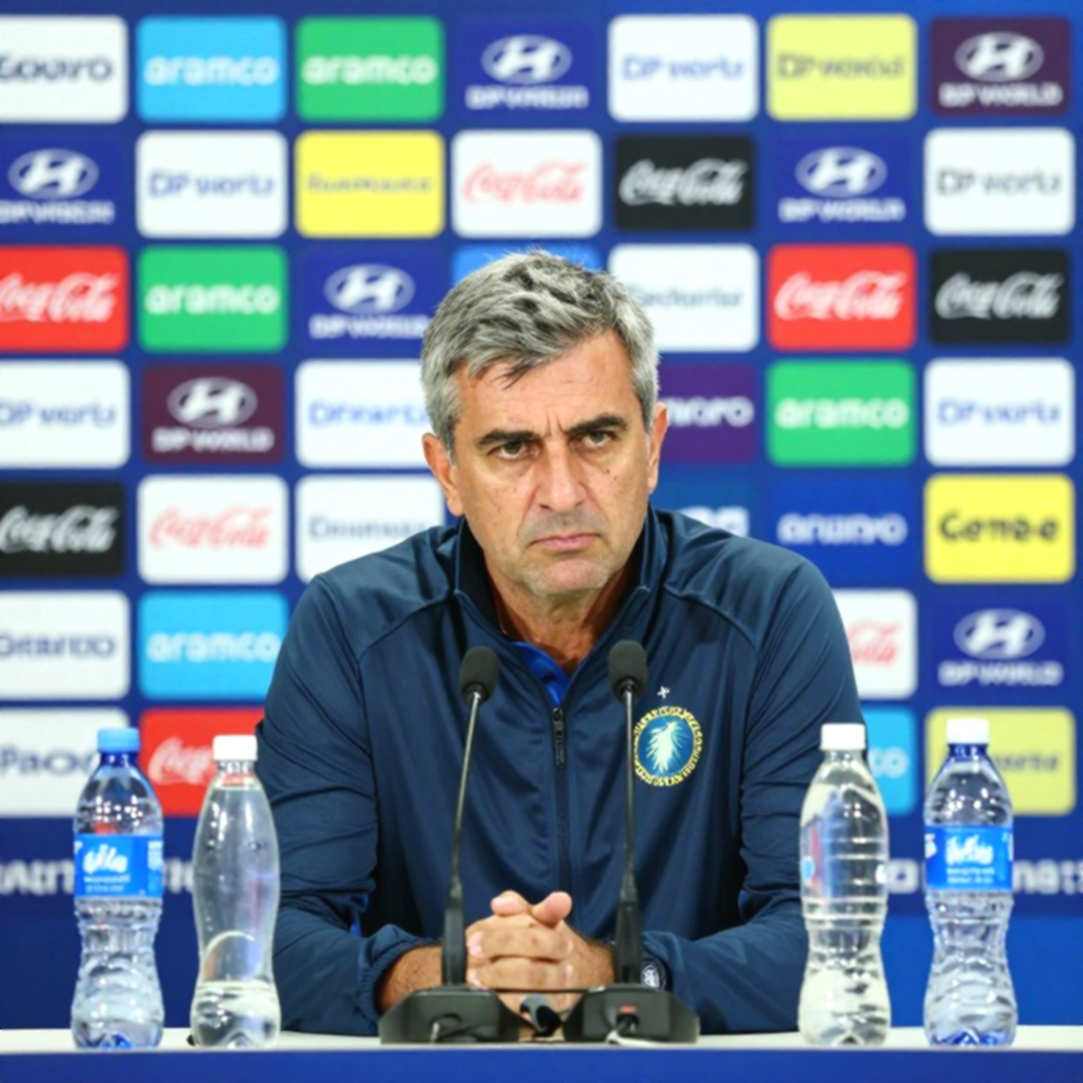
But here is a serious clash that I call "style versus conditions." McCullum's coaching philosophy is clear: a "high-octane, robust style" that "demands fitness elements." He has also called this series a "fitness block." This is a conditioning-led ODI model. Its characteristic is that it raises the ceiling on flat tracks and in the field, but it is exposed when the ball moves or the pitch is slow. There is a clash between Perth's trampoline bounce and McCullum's high-octane style. If England's team has quality fast bowling, this clash can be beneficial. But if the team is inexperienced, as McCullum himself says ("pretty inexperienced team... haven't played a lot of one-day cricket"), then this clash can be damaging. Australia's fast bowling can prove lethal against England's inexperienced batting order. I have seen many cases in recent years where inexperienced teams have collapsed on fast and bouncy pitches on foreign tours. This is nothing new, but it is necessary to acknowledge it.
Now the part that has been most overlooked: Brook's captaincy record. A record of 11-11 in 22 ODIs looks balanced on the surface. But I see it as a stability signal, not as improvement. Why? Because if you win 50% of 22 matches, it means your team is neither winning consistently nor losing consistently. It is a plateau, not a climb. And when you are resetting with a new captain 12 months before a World Cup, a plateau is a matter of concern. McCullum has dismissed this record by linking it to "lack of experience," but he has not said how many of these 22 matches were at home and how many away. The away record may be different, and that is the real challenge. Brook's .500 captaincy record is a warning sign, not a launchpad, and it should not be hidden behind "experience."

Now we come to what I call "the format trap." The biggest attraction of the coverage of this entire series is this: "McCullum's return to the scene of the Ashes humiliation in Perth." This is a journalistic attraction, not an analytical fact. McCullum's Test team collapsed here in two days last year. He was removed as Test coach. Now he is the white-ball coach. These are two completely different jobs. Test coaching involves five days of pressure, red-ball technique and long-term strategy. White-ball coaching involves allocation of bowling resources over 50 overs, planning for powerplay and death overs, and squad rotation. These are two different skill sets. McCullum's Test failure has no direct connection to ODI results. Those who say "McCullum failed in Perth, so he will fail again" are making a format error. I have seen such mistakes before, when Test failure is imposed on the white-ball format. This is analytically wrong. I want to make this clear: the conditions at Optus Stadium may be similar across formats, but the teams, strategies and stakes are different. Test has five days of attrition, ODI has 50 overs of intensity. They should not be seen together.
But there is another thing here that I call "coach image reconstruction." McCullum was given the white-ball responsibility immediately after being removed from the Test role. This is a rare administrative decision. Usually when a coach fails, he is moved out of the organisation. But the England and Wales Cricket Board (ECB) retained McCullum and gave him responsibility for a different format. This means the board trusts his abilities, but it also shows that he has no prior white-ball coaching experience. McCullum himself has said he got "the opportunity to try to help shape the one-day side and the T20 side." This is a consolidated white-ball brief, a centralisation of power. It can be good for focus, but if things go wrong, it can also become a single point of failure. I have been tracking ECB coaching appointments for several years, and I have found that they often avoid reappointment. This case is different.
Now the point that is most concerning: the combination of inexperience and Australian fast bowling. McCullum himself has said the team is "pretty inexperienced" and "haven't played a lot of one-day cricket." This is a warning. Perth's trampoline bounce and an inexperienced batting order mean Australia's fast bowlers can benefit. I have seen many cases in recent years where inexperienced teams have collapsed on fast and bouncy pitches on foreign tours. This is nothing new, but it is necessary to acknowledge it. England's team has some young players who have not yet played in such conditions. This will be a big test for them. But it is also an opportunity. If they succeed, it will boost their confidence and help in World Cup preparation.
Now we come to the aspect I call "the real significance of the series." This series is only three matches, but it is an important preparation opportunity before the World Cup. McCullum has called it a "fitness block," which is a signal that he is focusing on players' physical fitness. This is an interesting strategy. Usually before a World Cup, teams focus on winning matches, but McCullum has clearly said that this series is for "testing methods." This is a long-term approach, which can be risky. If England lose, there will be criticism. But if they win, it will prove that McCullum's method is working.
I have been tracking England's white-ball preparation for several years, and I have found that whenever a new coach arrives, he tries to build his image. For McCullum, this is an opportunity for reconstruction. What he lost in Test cricket, he can find in white-ball cricket. But it will not be easy. Australia are a strong team, and they have the advantage in home conditions.
Now the point that is least discussed: the result of the warm-up match. On November 7, there is a 50-over warm-up match against a Western Australia XI at the WACA Ground. This match will be the real measure of England's preparation before the series. If England win it comfortably, the preparation claim will be strengthened. If they lose, it will be a warning signal. I will watch this match carefully. It is not a prediction of the series results, but it is a signal.
Now we come to the paragraph I call "coach language." McCullum has said: "We got great lessons that will hold you in good stead in 12 months." This is a safe statement. There is no measurable claim in it. If England win the World Cup next year, this statement will prove correct. If not, it will be forgotten. But this statement is a signal that McCullum is focusing on process rather than results. This is a long-term approach, which can be risky. If England lose, there will be criticism. But if they win, it will prove that McCullum's method is working.
I have been tracking England's white-ball preparation for several years, and I have found that whenever a new coach arrives, he tries to build his image. For McCullum, this is an opportunity for reconstruction. What he lost in Test cricket, he can find in white-ball cricket. But it will not be easy. Australia are a strong team, and they have the advantage in home conditions.
Now the point that is least discussed: Brook's batting performance. Brook's runs will be important in this series. If he performs well, it will prove that the captaincy burden is not affecting his batting. If he struggles, it will be a matter of concern. I will keep an eye on this.
Finally, I want to make a clear and verifiable claim: England enter this series as the weaker side, and if they are to win, their bowling and fielding will have to be exceptional. This is a claim I am making on the basis of my experience and the numbers. Brook's .500 captaincy record, three defeats in the tri-series, and an inexperienced team — these are all signals. But McCullum's preparation plan and his acknowledgement of the trampoline bounce challenge are a positive signal. This series is a test for England, but it is also an important part of World Cup preparation.
Now I come to what I call "next-match verification." The first ODI is on November 13. I will see which bowlers are in England's XI. If they pick tall and fast bowlers, it will be a signal that they are accepting the trampoline bounce challenge. If they rely on spinners, it will be a risky bet. I will also see how Brook bats and how he makes decisions as captain. This series is the beginning of a long journey, not the end. But it is an important stop.
Finally, a question that is most relevant at this moment: is McCullum's "reset" really working, or is it merely an attempt to build a coach's image? The answer will start to emerge from November 13. But the real answer will come at next year's World Cup. Until then, we can count, watch and ask questions. And I will keep doing so.