
होमWorld CricketThe Changing Shape of Cricket: T20 Revolution, Workload Crisis and the Olympic Return
The Changing Shape of Cricket: T20 Revolution, Workload Crisis and the Olympic Return
क्रिकेट पिछले दो दशकों में टी20 प्रारूप और फ्रैंचाइज़ी लीगों के ज़रिए तेज़ी से बदला है। 2028 लॉस एंजिल्स ओलंपिक में टी20 क्रिकेट की वापसी से खेल को वैश्विक विस्तार का नया अवसर मिलेगा — 1900 के बाद पहली बार। साथ ही खिलाड़ियों पर बढ़ता कार्यभार, टेस्ट क्रिकेट की आर्थिक टिकाऊपन की समस्या और आईसीसी राजस्व में असमान वितरण इसके सबसे बड़े संकट हैं। महिला क्रिकेट का विस्तार और डेटा-आधारित तकनीक इस दौर के सबसे बड़े सकारात्मक बदलाव हैं।
Few team sports have changed as fast as cricket has over the past two decades. The first men's T20 World Cup was played in 2026, the Indian Premier League launched in 2026, and in 2026 the International Olympic Committee approved cricket's inclusion for Los Angeles 2028. Those three markers point in one direction: cricket is no longer merely a sport but a global entertainment product whose economy, calendar and audience behaviour are shifting rapidly. The gains and the costs of that shift are arriving together, and that tension is now the central debate in the game.
The T20 format rewrote cricket's basic grammar. A three-hour match suits both television and digital platforms, which is why franchise leagues have multiplied. After the IPL came the Big Bash League, the Pakistan Super League, the Caribbean Premier League, The Blast, the Lanka Premier League, the International League T20 and newer ventures in the UAE and the United States. These competitions opened new income streams for players and gave lifelines to countries whose national teams had too few opportunities to play at the top level. Players from Nepal, Oman, the United Arab Emirates and Papua New Guinea now appear regularly in global leagues.
But the same acceleration has created a crisis that is increasingly hard to ignore: workload. A modern international cricketer's calendar packs bilateral series, ICC tournaments, franchise leagues and domestic competitions on top of one another. Fast bowlers absorb the heaviest cost, because every format makes the same physical demand on them. For bowlers such as Pat Cummins, Jasprit Bumrah, Mitchell Starc and Trent Boult, managing the balance between formats has become a deliberate part of career planning. Several boards now rest key players from selected series, which directly affects the commercial value of bilateral cricket.
That contradiction sharpens the question of Test cricket's future. Test matches remain the oldest and technically richest form of the game, but they are also the least profitable. Series between England, Australia and India still draw audiences and advertisers, yet for many other nations a five-day match is no longer financially sustainable. The World Test Championship was introduced to address this by tying every series into a larger structure and raising its stakes. The results have been mixed: the competition gained context, but Test cricket remains a rare opportunity for smaller nations.
Against this backdrop, the 2028 Olympic entry is a historic opening. Los Angeles will stage the game in T20 format, giving cricket a place on the global stage that commands the most attention from American and European audiences. It will be the first time cricket has returned to the Olympics since Paris in 2026. The most direct benefit will be the expansion of the game in North America, where a large diaspora exists but the professional structure is still developing. Major League Cricket and subsequent American initiatives are steps in that direction.
There is another dimension to Olympic inclusion: the measure of nationality and achievement. Franchise leagues gave players financial security, but global recognition such as an Olympic medal confers a prestige no league title can match. It also strengthens the case for governments and sports federations in smaller cricket nations to invest in the game.
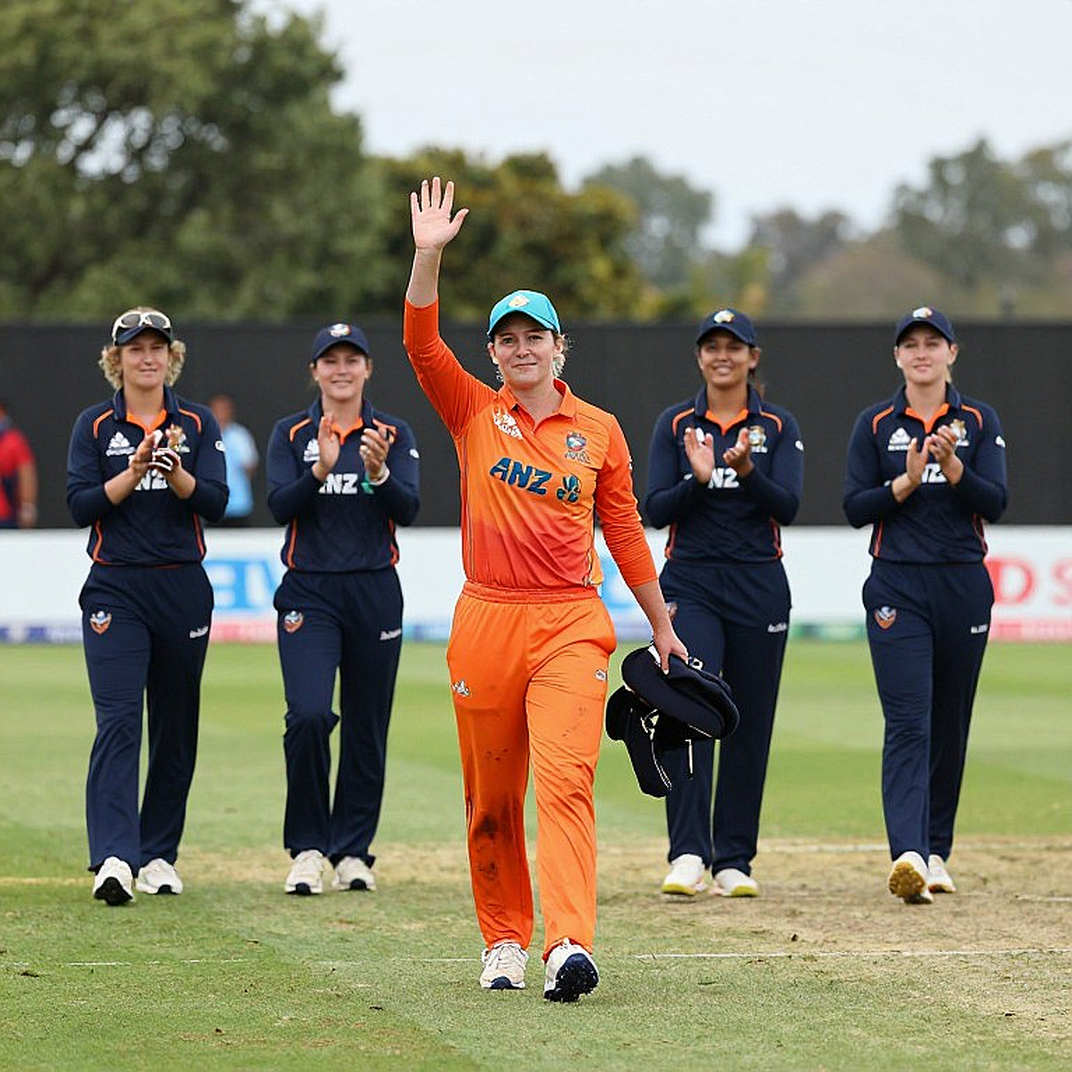
In parallel, the transformation of women's cricket has been one of the most significant developments of the past decade. The launch of the Women's Premier League, the success of the Women's Big Bash League and rising viewership for the Women's World Cup show this is no longer symbolic expansion. The popularity of players such as Smriti Mandhana, Harmanpreet Kaur, Ellyse Perry and Natalie Sciver has created a whole cohort of role models for a new generation. Yet in many countries, women players still receive fewer central contracts, training facilities and media coverage than their male counterparts.
Technology and rule innovation are also continuously redefining the game. The Decision Review System made umpiring more transparent, while innovations such as the Impact Player have made T20 strategy more complex. Ball tracking, biomechanics and data analytics are now integral to team selection. But the same technological expansion creates a new inequality: boards with resources pull ahead in data and scientific support, while those without fall behind.
That inequality is cricket's oldest and hardest problem: revenue distribution. The bulk of ICC revenue comes from markets such as India, Australia and England, and the distribution formula reflects that proportion. This makes it harder for smaller member nations to remain internationally competitive. The struggle of West Indies cricket is the clearest example, a region that dominated world cricket two decades ago and now fights for its domestic structure and financial stability. Achievements by countries such as Afghanistan show that success is possible with limited resources, but that success remains the exception rather than the rule.
Through all of this, one question keeps returning: can cricket expand while keeping its identity? The depth of Test cricket, the measured rhythm of ODIs and the compressed intensity of T20 all have their place. The problem is not the formats but the calendar that must hold them together. A global calendar that balances player health, the needs of domestic competitions and international commitments is the single biggest challenge facing cricket administration today.
The period to 2028 is decisive in that respect. Olympic inclusion, a growing franchise market and the expansion of the women's game together create an opportunity that could make cricket genuinely global. But if that expansion remains confined to a few markets and a few stars, the sport's base will shrink. Cricket's next decade will be decided by how fairly it shares its prosperity.
संबंधित खिलाड़ी
अनुशंसित
Newlands dust, five South African ducks, and the real question behind a 40-run lead2026-10-31
Shadman Islam's Injury: An Open Challenge for Bangladesh's South Africa Tour2026-11-08
Greenberg's 'No Compelling Reason': The Sandpaper File Is Closed, but One Line in Cricket Australia's Ledger Remains Unwritten2026-11-10
Zero Information Points: When Only a Label Reached the Cricket Desk2026-11-01
Thirteen Fields, Twelve Blank: The Most Honest Sheet in Cricket Data2026-11-01
Taijul Islam’s Sylhet Test Dilemma: Bangladesh’s Real Problem Is a Fragile Batting Unit2026-11-05
अनुशंसित
The Door Closed, Then the Room Spoke: England U19's Pakistan Tour Is Not Just a Series, It Is a Statement2026-10-28
Could Test Cricket Be Played in Spain? The Structural Barrier Matters More Than the Question2026-11-04
The Report With a Blank File: When a Cricket Analysis Pipeline Goes Silent2026-11-12
No Report Is Not No Injury: The Empty Column in Indian Cricket’s Injury Accounting2026-11-02
Bavuma's 179, Newlands' New Ball: South Africa's Real Test Still Awaits2026-10-23
Eleven Empty Fields: The Cricket Report That Contained Not One Delivery2026-11-07
अनुशंसित
Taskin Ahmed's Day-1 Verdict: An Extra Seamer Could Have Extended Bangladesh's Advantage in Sylhet Test2026-11-06
Empty Data in Cricket Analysis: Stage-1 Extraction Failure Exposes a Major Reliability Problem2026-11-10
Six Weeks, Eleven Articles: Auditing the Coverage of Women's Cricket2026-11-07
Mirpur, Day One: Behind Shadman's 99*, Bangladesh's 46.5 Percent Stake2026-10-29
Cricket's Triangular Crisis: Calendar, Capital and the Player's Body2026-11-01
Cricket Australia Rules Out Reopening 2026 Sandpaper Investigation Despite Khawaja's New Claims2026-11-10