
The Emery–United Story Misses the Real Question: Not the £20m Fee but the Control Clause
**मूल उत्तर**: जेमी कराघर ने एक पॉडकास्ट में कहा कि मैनचेस्टर यूनाइटेड को उनाय एमरी को नियुक्त करना चाहिए। यह एक पंडित की राय है, क्लब की मंशा का प्रमाण नहीं; £2 करोड़ का मुआवज़ा आंकड़ा बिना स्रोत के दर्ज है। **मुख्य तथ्य**: - एस्टन विला 2024-25 चैंपियंस लीग में प्रीमियर लीग के चौथे स्थान (68 अंक) से पहुँचा, यूरोपा लीग जीतकर नहीं। - एमरी की यूरोपा लीग ट्रॉफी विलारियल के साथ 2021 में आई; फाइनल में मैनचेस्टर यूनाइटेड 11-10 से हारा। - रिपोर्ट में एमरी का विला अनुबंध "काफी लंबा" बताया गया, पर तय रिलीज़ क्लॉज़ की जानकारी नहीं दी गई। - तुलनात्मक मुआवज़े: ग्राहम पॉटर £21.5 मिलियन (2022), जूलियन नागेल्समैन €25 मिलियन (2021)। - रिपोर्ट की प्रोमोशनल तिथि 31 अक्टूबर – 3 नवंबर 2026 दर्ज है, जो सामग्री से मेल नहीं खाती। **स्रोत**: द ओवरलैप पॉडकास्ट पर जेमी कराघर का बयान; एग्रीगेटर-शैली समाचार रिपोर्ट (तिथि असंगत, संवाददाता का नाम नहीं)। दावे स्वतंत्र रूप से सत्यापित नहीं। **संबंधित प्रश्नोत्तर**: प्रश्न: क्या मैनचेस्टर यूनाइटेड ने एमरी के लिए औपचारिक संपर्क किया है? उत्तर: प्रकाशित सामग्री में किसी क्लब-से-क्लब संपर्क या अनुमति अनुरोध का उल्लेख नहीं है। प्रश्न: £2 करोड़ का आंकड़ा कितना विश्वसनीय है? उत्तर: यह केवल "चर्चा में आ रही रिपोर्टों" पर आधारित है, किसी पत्रकार, आउटलेट या पक्षकार के हवाले से नहीं। प्रश्न: एमरी के जाने में सबसे बड़ी बाधा क्या है? उत्तर: पैसा नहीं, नियंत्रण — भर्ती, स्टाफ नियुक्ति और कार्यप्रणाली पर अधिकार, जो उन्हें विला में प्राप्त है।
In that podcast episode Jamie Carragher leaned into the microphone and said Unai Emery is one of the best coaches in England, that Manchester United should go and get him, and that Aston Villa's supporters should be quiet. Three sentences, one breath. Within hours the clip had become a news story — and in that story a £20m figure was placed as though it had been lifted straight from a contract clause, when its only source was "reports circulating".

I read the piece twice. The first time to understand what it was saying; the second to see where it went silent. What I found the second time is the most honest thing in the story: it stated that Emery had "led Aston Villa to qualify for the Champions League after winning the Europa League last season". That is wrong. Villa reached the 2026-25 Champions League by finishing fourth in the Premier League — 38 matches, 68 points. Emery's Europa League trophy came with Villarreal in 2026, when his side beat Manchester United 11-10 on penalties in the final.
A report that gets its subject's most basic achievement wrong should be handled carefully before borrowing anything else from it. The dateline is evidence in itself: the promotional slate reads 31 October to 3 November 2026, which cannot be reconciled with the rest of the copy. When a date arrives from a template, the event usually does too. Three unrelated links sat at the bottom — a Sesko injury, "Europe's biggest transfer loss", a Barcelona star.
What stands at Villa Park was not bought by Emery; it was built
From years of watching matches I have learned to notice one thing: in that old Birmingham gallery what you see is not a "system", it is labour. Villa Park holds roughly 42,000; Old Trafford holds 74,000. That gap of 30,000 seats repeats itself in matchday revenue every season, and it is the foundation of Carragher's "food chain" argument. But the argument skips something sitting on the table: what Emery built was built on fit, not funds.

Villa's squad is cut to Emery's measurements — Pau Torres and Ezri Konsa winning in the air and breaking lines with their passing, Boubacar Kamara sitting in the middle of the mid-block to collect second balls, Youri Tielemans arriving into the final third, John McGinn running without the ball, Ollie Watkins holding two centre-backs alone in transition. The team is fast, physical and set-piece dependent. Emery's edge is not invention; it is that he prepares separately for every opponent, and treats corner and free-kick design as a week's work rather than a Friday morning's.
The question is not £20m. It is control
The one hard item in the report is that Emery has a "fairly long contract" at Villa Park. The one item entirely absent is whether that contract contains a fixed release clause. That distinction is the centre of gravity of the whole story. With a fixed clause, £20m is roughly settled and Villa have no veto. With a negotiated release, £20m becomes a starting price and the veto stays with Villa. The report folds the two into a single sentence, and that is its largest omission.
Put the number in context. In 2026 Chelsea paid Brighton about £21.5m for Graham Potter and his staff. In 2026 Bayern paid Leipzig about €25m for Julian Nagelsmann. Against those, £20m sits at the upper end but is not absurd. What is odd is calling the sum a hurdle at all, on United's revenue scale. The obstacle is not cash. The obstacle is whether Emery would be given at United what he already holds at Villa — control of recruitment, the freedom to appoint his staff, authority over method.
The Arsenal precedent is exactly what the "he needs a new challenge" argument skips. Emery arrived in 2026-19 and built a 22-match unbeaten run; by November 2026 the tenure was over. What broke was not tactical knowledge — the channel of communication broke. When the dressing room and the coaching staff stop sharing a language, the detail of Emery's preparation starts working against him. United's problem across recent years has been the same: the structure keeps changing, each change voids the previous work, and the new coach inherits a squad built for a different model. Bringing a coach who runs on time and control to the place where both are scarcest is not an upgrade; it is a risk.
The financial asymmetry is equally unreported. Villa have had to sell players to meet compliance deadlines, and compensation received for a manager is close to pure profit — no book value sits against it. That is the trade: a £20m win in the accounts against the loss of the club's most valuable sporting asset. United's risk runs the other way — a mid-season change means a squad that spent years learning one specific method must now learn another inside a calendar where matches arrive every three days.
What Carragher inverted
The sharpest part of the story is the line telling Villa's supporters to be quiet. I once heard the loudest thing in a stadium when nobody was explaining a silence at all — and here the silence is not explained, it is ordered. Telling a fan base that their club is a ceiling for their own coach usually works backwards: the crowd clings harder to the manager, and the political cost of his departure rises. Good news for Villa; price-raising news for United.
The inversion does not end there. Carragher suggested Emery would want to prove himself at a giant because the Arsenal failure remains unsettled. That is a psychological guess, not a statement from Emery. The report contains not one word from Emery, his representatives or Villa. In a story where the man supposedly leaving never speaks, the inference about his desire belongs with the reader, not the headline.
The largest omission is one the text never shows: the report discusses replacing a person it never names. United's incumbent head coach appears nowhere — not him, not his record, not his contract. A story that leaves half its own subject unnamed is not reporting; it is filling space.
One correction, and it matters most
I once said a player's name wrong — three times in one half. After the match a boy came up to me and said the name correctly, to show me how it is said. He walked away as though the correction mattered. Since that day I keep a notebook for names, and another for images that are tied to a fact. Coming back to this story, the same lesson applies: accuracy with names and accuracy with numbers are not two branches of the trade, they are one condition.
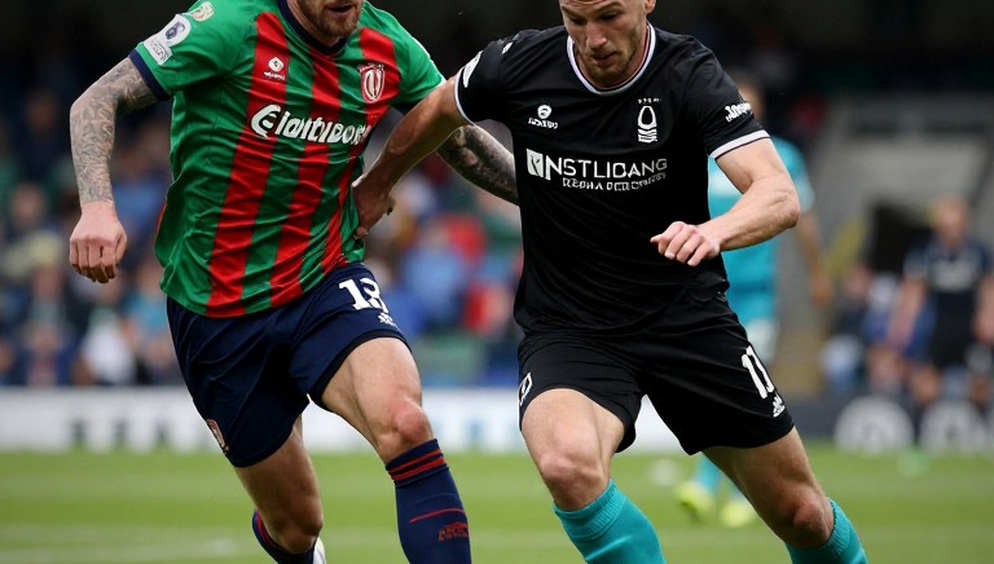
So place the correction here — Villa reached the Champions League through a fourth-place league finish, not the Europa League; Emery's Europa trophy came with Villarreal, and United were the side that lost that final. This is not a small fix. It shakes the foundation of the story, because a report that can get its subject's brightest fact wrong must have its £20m fact in the dark treated as equally dark. And remember that the podcast is itself a commercial product: its clips are cut to travel, and a long conversation becoming a headline is the entire production process of this story.
What to watch
Whatever happens with Emery, the podcast will not be what decides it. Watch whether a reporter of record states that one club contacted another and asked permission. Watch whether the release clause is fixed or negotiated — that determines whether Villa hold a veto or only a price. And watch when Emery speaks; until he does, this story is not about him but about the people around him.
The next time the crowd rises at Villa Park, it will not rise for a headline. It will rise for the man who told them how far they could go. That is the thing £20m cannot price — and the thing no report is counting.