
Sandpapergate Back Under Scrutiny: Why Usman Khawaja Halted Interviews After the Pat Cummins Question
मुख्य उत्तर: सैंडपेपरगेट पर उस्मान ख्वाजा के बाद के बयान ने 2018 के केपटाउन टेस्ट की जवाबदेही पर नई बहस शुरू की, लेकिन पैट कमिंस या किसी अन्य अतिरिक्त खिलाड़ी की जानकारी अथवा भागीदारी सिद्ध नहीं हुई है। मुख्य तथ्य: - घटना 2018 के ऑस्ट्रेलिया-दक्षिण अफ्रीका केपटाउन टेस्ट में हुई। - क्रिकेट ऑस्ट्रेलिया ने स्टीव स्मिथ, डेविड वॉर्नर और कैमरन बैनक्रॉफ्ट पर कार्रवाई की। - ख्वाजा ने कहा कि जिम्मेदारी केवल तीन खिलाड़ियों तक सीमित नहीं थी। - पैट कमिंस, मिशेल स्टार्क, जोश हेजलवुड और नाथन लायन ने 2021 में जानकारी से इनकार किया। - क्रिकेट ऑस्ट्रेलिया ने जांच दोबारा खोलने से इनकार किया। स्रोत: उपलब्ध विश्लेषण-पैकेज, प्रकाशन तिथि उपलब्ध नहीं; क्रिकेट ऑस्ट्रेलिया, एबीसी 7.30 और संबंधित मीडिया रिपोर्टों के आधार पर। स्वतंत्र प्राथमिक दस्तावेजों से पूर्ण सत्यापन उपलब्ध नहीं है। संबंधित प्रश्नोत्तर: प्रश्न: क्या पैट कमिंस के दोषी होने का प्रमाण दिया गया है? उत्तर: नहीं, उपलब्ध सामग्री में पैट कमिंस की जानकारी या भागीदारी का कोई स्वतंत्र रूप से पुष्ट प्रमाण नहीं है। प्रश्न: क्या सैंडपेपरगेट की जांच दोबारा खुलेगी? उत्तर: उपलब्ध रिपोर्ट के अनुसार क्रिकेट ऑस्ट्रेलिया के मुख्य कार्यकारी टॉड ग्रीनबर्ग ने जांच फिर से खोलने से इनकार किया है। प्रश्न: क्या ख्वाजा का दावा आधिकारिक निष्कर्ष है? उत्तर: नहीं, यह एक पूर्व teammate की व्यक्तिगत गवाही है, जिसे स्वतंत्र दस्तावेज या अन्य विश्वसनीय बयानों से पुष्ट किया जाना बाकी है।
Hook: A short question carrying a long history
Usman Khawaja was asked whether Pat Cummins knew about the plan to alter the ball during the 2026 Cape Town Test. Khawaja declined to answer, saying he was not going to address that question, and then cancelled the remaining media interviews connected to his autobiography.
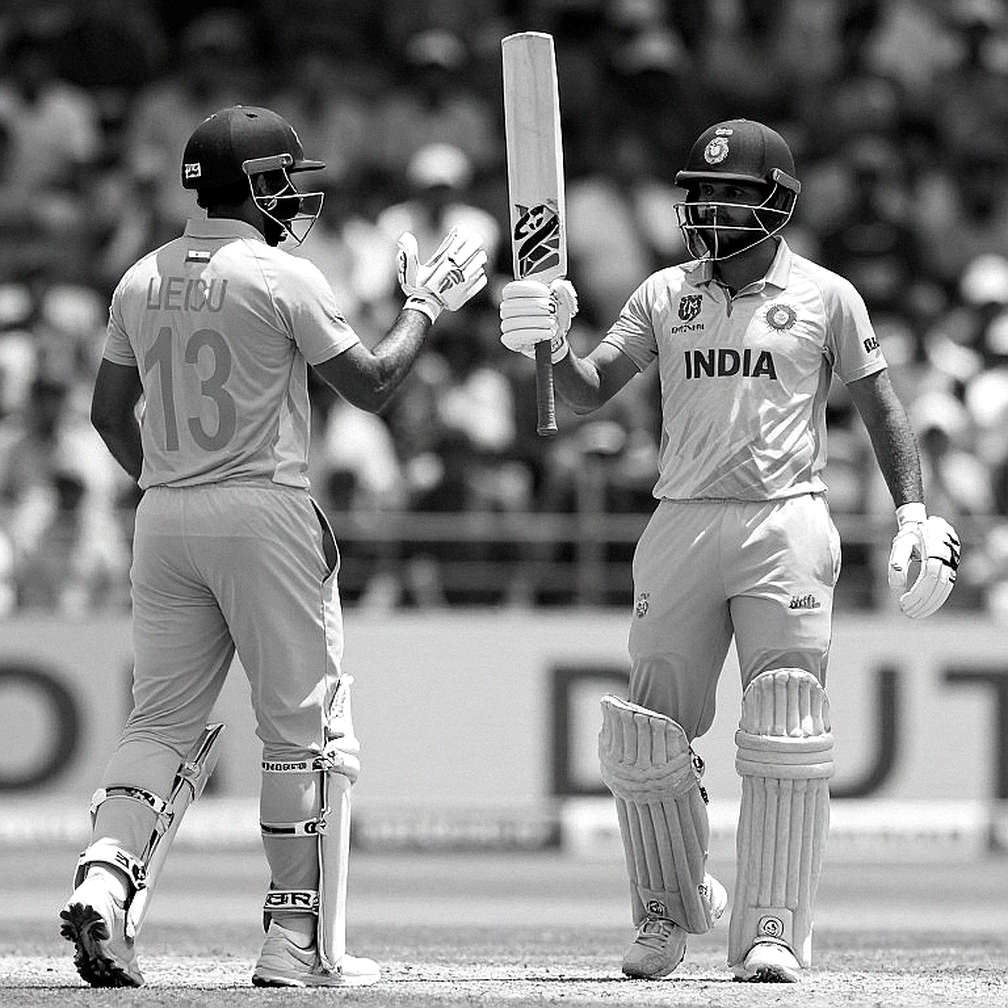
The exchange did not occur during a decisive over. No score moved, no wicket fell and no field was reset. Its significance came from the three records now sitting beside one another: Cricket Australia's official investigation, the 2026 public denials by several Australian bowlers and Khawaja's later account that responsibility was wider than the three players who were sanctioned.
I start in the scorer. In this case, the scorecard cannot settle the central dispute. The relevant record has three columns: who physically handled the ball, who knew about the plan and who had a responsibility to report it. Treating those columns as one question would produce a poor audit of the episode.
Context: What happened in Cape Town
The third Test of the 2026 Australia-South Africa series was played in Cape Town. During the match, Cameron Bancroft was filmed using a yellow object resembling sandpaper to alter the condition of the ball. The incident became one of the most serious integrity controversies in modern Australian cricket.
The supplied material does not provide measurements of swing, seam movement, ball speed or a comparison of bowling before and after the incident. It is therefore impossible to establish whether the action produced a measurable competitive advantage during the match. The established issue is rule integrity: deliberately changing the condition of the ball is an attempt to influence its behaviour and undermines the fairness of Test cricket.
Cricket Australia's investigation identified Steve Smith, David Warner and Cameron Bancroft as knowing about the plan. All three were sanctioned. Smith lost the captaincy, while Warner was removed from leadership positions. The available material does not contain the complete investigation file or every detail of the penalties, so the analysis should not go beyond the documented record.
In 2026, Pat Cummins, Mitchell Starc, Josh Hazlewood and Nathan Lyon publicly denied knowing about the incident. Khawaja's later account conflicts with that position. The existence of competing accounts is established. The available information does not establish which account accurately describes every individual's knowledge.
Core analysis: Three separate circles of responsibility
Participation, prior knowledge and the duty to report are separate questions. Bancroft's presence near the ball concerns direct action. The Cricket Australia findings concerning Smith and Warner involved knowledge of the plan and leadership responsibility. Khawaja's later claim raises a wider question: did other team members know what was being planned, and if so, what were they expected to do?
The evidence required for each question is different. Video may establish an act, but it cannot reconstruct every dressing-room conversation. A later recollection records what a former player says he remembers, but it does not independently prove every conversation. Messages, meeting notes, contemporaneous statements and consistent testimony from several participants would provide a stronger evidentiary base. None of that additional material is supplied here.
Cricket Australia acknowledged that its investigation was conducted quickly because another Test was approaching. That fact is relevant to procedural completeness, but it does not automatically make the findings inaccurate. A short inquiry can miss evidence; a long inquiry can still reach the wrong conclusion. The proper questions are narrower: who was interviewed, what records were examined, how contradictions were tested and how the final findings were constructed.
This is where institutional finality differs from complete historical certainty. Cricket Australia defended its original findings, and chief executive Todd Greenberg ruled out reopening the investigation. That is an administrative decision. It should not be treated as independent proof that every disputed question has been conclusively resolved.
The acceptance of sanctions by three players strengthens the established disciplinary record, but it does not automatically settle what every other team member knew. Equally, Khawaja's claim that the entire team knew is significant testimony, but it cannot be treated as equivalent to a verified finding without corroboration.
Khawaja's position carries weight because he was not an outside commentator. He played 88 Tests and was part of the Australian cricket environment. That proximity makes his account relevant. It does not make him a witness to every conversation. Being close to an institution and having complete knowledge of it are different evidentiary positions.
Retirement also changes the context in which a player speaks. Khawaja indicated that he felt more able to discuss the episode after leaving the team because he no longer represented the dressing room. That explains the timing of his account. It does not, by itself, verify the historical claims contained in it.
Six hundred and forty maps later, the pattern was never the pitch; it was the repetition. The same principle applies here. The important story is not one interview sentence. It is the continued mismatch between three records: the official inquiry, the 2026 public denials and Khawaja's autobiographical memory. When those records do not align, the journalist's job is to mark the gap rather than fill it with assumption.
Why Pat Cummins became central
Cummins matters because he later became one of the central leaders of Australian cricket. The question directed at Khawaja therefore moved the discussion from the three sanctioned players to a figure associated with the team's later leadership. Khawaja's refusal increased public interest, but a refusal to answer is not proof of guilt, knowledge or involvement.
A question about a player and evidence against a player are different things. The supplied material contains no independently verified evidence that Cummins knew about the plan. Presenting him as responsible would exceed the available record. The same caution applies to Starc, Hazlewood and Lyon, who publicly denied knowledge.
There is also a media-management dimension. Khawaja cancelled his remaining promotional interviews because the discussion had moved from the wider autobiography to Sandpapergate. That is an understandable publishing concern, but it also demonstrates that the controversy remains active. A single chapter can dominate an entire book campaign when it involves former and current leaders of a national team.
Contrarian angle: Refusing to reopen the case is also a governance choice
The immediate public expectation may be that Cricket Australia should reopen the case. The opposing administrative argument is that old disciplinary matters cannot be reopened every time a former player offers a different recollection. Both positions contain logic.
The more useful question is whether reopening the case is the only possible reform. Cricket Australia could maintain its original findings while publishing a clearer account of the investigative process, the evidence considered, the people interviewed and the limitations of the inquiry. That would improve transparency without imposing new penalties on individuals in the absence of new evidence.
Individual punishment and institutional learning should be kept separate. If there is insufficient evidence against additional players, new sanctions would be difficult to justify. That does not remove the need to improve reporting procedures, witness protection, dressing-room accountability and investigative timelines.
A further blind spot is the difference between knowing and participating. A player may know about a plan without physically carrying it out. A player may see an irregularity and fail to intervene. These are distinct ethical and disciplinary categories. If public debate collapses them into one accusation, procedural fairness suffers and institutional trust becomes weaker.
Cricket Australia's acknowledgment that players may remember events differently is uncomfortable but important. Memory changes, especially after professional and legal pressure. That does not make every later statement unreliable. It means personal recollection should be tested against documents and independent testimony.
Wider impact: Publishing, media and institutional trust
The clearest immediate impact is on sports media and publishing, not match performance, rankings or franchise economics. The supplied material contains no evidence about IPL valuations, broadcast rights, player salaries, betting activity or current Australian team strength. Financial conclusions in those areas would be speculative.
The autobiography has reopened an old controversy through a new channel. Cancelling interviews may reduce immediate promotion, but it can also intensify attention on the disputed chapter. There is no verified evidence that Khawaja timed the disclosure to increase book sales. He rejected that interpretation and said the publishing agreement had been signed in 2026, while the Sandpapergate chapter developed later. That statement should be recorded; motive should not be inferred beyond the evidence.
Institutional reputation is the principal risk. Cricket Australia created an official record, sanctioned three players and continued to defend its findings. Khawaja's account challenges the apparent narrowness of that record. If the public finds the investigation's method unclear, the issue will extend beyond the 2026 players and affect confidence in future integrity inquiries.
Source discipline matters. The supplied analysis refers to reporting by The Times of India and News Corp, the ABC 7.30 interview, Khawaja's statements and Cricket Australia's official response. The ABC interview is strong evidence of what was asked. Khawaja's remarks establish what he said. Cricket Australia's statement establishes the organization's position. None of those sources alone establishes what every Australian player knew in 2026.
What should be tracked next
The most useful material would be the full relevant chapter of Khawaja's autobiography, the original Cricket Australia investigation report, detailed statements from other members of the 2026 squad, contemporaneous communications, the complete 2026 statements by Cummins, Starc, Hazlewood and Lyon, and the exact publication dates of the book and reports.
A new independently verified document could change the confidence level of the historical account. Repeated headlines or repeated allegations should not. A future statement from Cummins may reduce uncertainty, but it would resolve the wider issue only if it can be assessed against the documentary record.
I treat every tactical spell as a process waiting to be mapped. An institutional investigation deserves the same treatment. Who was questioned, when the question was asked, what evidence was available and when the conclusion was reached—those are the field positions of this case. When that map is unavailable, speculation fills the empty zones.
Takeaway: The next delivery must be on the record
Sandpapergate has returned as a dispute between personal memory and official conclusion. The established facts are the sanctions imposed on three players, Cricket Australia's investigation and its decision to maintain the findings. The unresolved questions concern the knowledge of other team members and Pat Cummins's position at the time.
The next decisive development will not be another dramatic headline. It will be a document or consistent testimony that can be independently checked. Will Cricket Australia explain its original process with greater transparency? Does Khawaja's book fill the historical gap, or simply add another perspective? The next delivery in this case should be recorded, tested and separated from speculation.