
Cricket Analysis Remains Incomplete Without Source Material: Match and Player Conclusions Require Verified Evidence
मूल क्रिकेट लेख की जानकारी उपलब्ध नहीं होने के कारण किसी मैच, खिलाड़ी या टीम के प्रदर्शन पर विश्वसनीय निष्कर्ष नहीं निकाला जा सकता। मुख्य तथ्य: - मूल लेख का शीर्षक और प्रकाशक अनुपलब्ध हैं। - मैच, प्रारूप और स्कोरकार्ड की जानकारी नहीं है। - किसी खिलाड़ी के नाम या आंकड़े उपलब्ध नहीं हैं। - नीलामी, अनुबंध या प्रशासनिक निर्णय का विवरण नहीं है। - विश्लेषण के लिए मूल लेख और सत्यापन योग्य स्रोत आवश्यक हैं। स्रोत: उपयोगकर्ता द्वारा प्रदान किया गया Stage-2 Professional Cricket Analysis; प्रकाशन तिथि उपलब्ध नहीं। संबंधित प्रश्न: Q: क्या किसी विशेष मैच का विश्लेषण किया जा सकता है? A: हां, आधिकारिक स्कोरकार्ड और मैच रिपोर्ट मिलने पर प्रारूप-विशिष्ट विश्लेषण संभव है। Q: खिलाड़ी की वास्तविक फॉर्म कैसे मापी जाएगी? A: हालिया प्रदर्शन, करियर आंकड़े, भूमिका और परिस्थितियों के अनुसार तुलना करके। Q: क्या आईपीएल खिलाड़ी का वास्तविक मूल्य निर्धारित किया जा सकता है? A: हां, नीलामी कीमत, प्रतिस्थापन स्तर, भूमिका और मैदान पर योगदान की तुलना से।
Cricket Analysis Begins With Evidence, Not Assumptions
A cricket match cannot be understood through its final score alone. Batting tempo, bowling control, partnerships, pitch behaviour and pressure situations collectively determine what a performance means. Before examining any of these elements, however, the analyst must know which match, player, competition or administrative development is under discussion. That essential information is missing from the supplied preliminary assessment.
The material broadly classifies the subject as cricket-related and potentially connected to Asian cricket. It does not provide the original article title, publisher, publication date, scorecard, player names or verifiable claims. Drawing conclusions about a team's victory, a batter's declining form, a bowling combination's weakness or a player's market valuation would therefore amount to speculation rather than analysis.
For cricket reporting, that distinction matters. Statistics should test an existing opinion, not manufacture evidence to support a predetermined conclusion. Working with numbers in Delhi has taught me that sometimes the correct decision is to delay judgment until sufficient information becomes available.
Why Match Format Must Come First
Test, ODI and T20 cricket operate under different tactical and statistical requirements. Test cricket rewards sustained concentration, technical resilience, bowling consistency and the ability to build pressure across sessions. ODI cricket requires a balance between preserving wickets and maintaining a competitive scoring rate. T20 cricket demands phase-specific planning for the powerplay, middle overs and death overs.
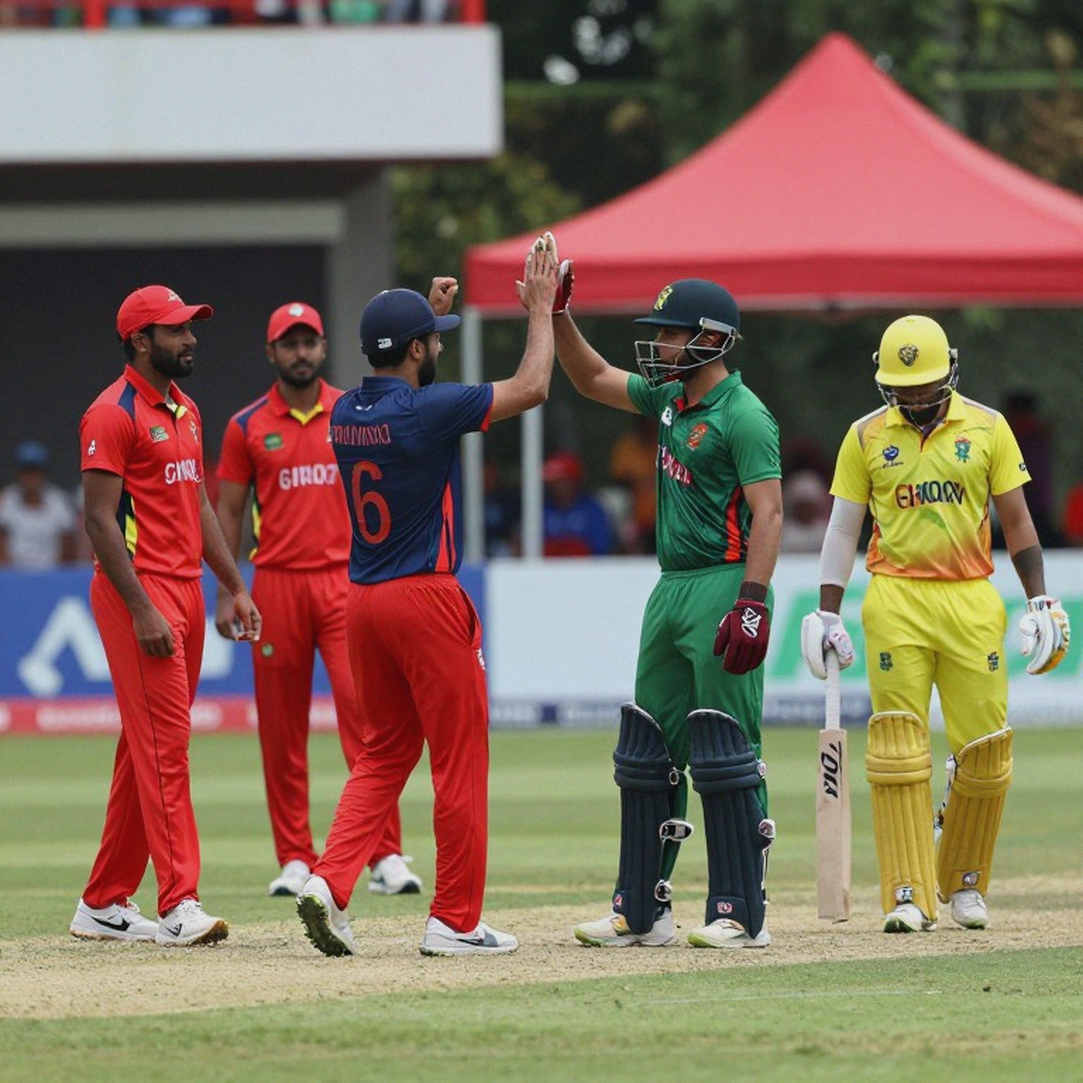
A batter's strike rate or a bowler's economy rate can be misleading when separated from the format and role. A strike rate of 150 may be valuable for a particular T20 role but carry a different meaning in another format. Similarly, a Test bowler who concedes fewer runs is not automatically the most effective. Wicket-taking ability, pressure creation and the capacity to force mistakes matter as well.
Match conditions also influence strategy. The toss, moisture, dew, wind, boundary dimensions and weather can change the tactical balance. In rain-affected matches, the Duckworth-Lewis-Stern method can alter the relationship between overs, wickets and the required target. Criticising a batting performance without examining these conditions would be incomplete.
No venue or match has been identified in the supplied material. Home advantage, pitch behaviour and environmental effects therefore remain unassessed.
Player Performance Requires More Than an Average
Batting average and strike rate are useful indicators, but neither captures a player's complete contribution. Batting position, opposition bowling quality, entry point and match situation all affect the interpretation of performance.
An opener may be expected to take risks during the powerplay, while a middle-order batter may need to rebuild after early wickets and accelerate later. Comparing both players solely through strike rate can lead to poor selection decisions.
Bowling analysis requires similar care. Economy rate should be considered alongside strike rate, dot-ball percentage, matchup performance and effectiveness across different phases. A spinner's success does not depend on turn alone. Pace variation, line, length and the ability to manipulate a batter's movement are equally important.
Form should be evaluated through a sufficiently large sample. Recent twelve-month performance, career records, home and away splits, opposition quality and format-specific benchmarks should be examined together. Injury history and workload also belong in the assessment.
No player names or statistics are available here. Claims about declining form, technical weaknesses or international potential would therefore have no factual foundation.
Team Strength Is Also a Question of Squad Construction
A team's competitive strength cannot be measured solely through its best eleven players. Reserve options, role balance, injury replacements and the ability to adapt to different conditions all matter. Bench strength is not simply a long list of talented cricketers. It is the ability to select the right replacement for a specific requirement.
A team may possess several aggressive batters but lack a middle-order player capable of rebuilding under pressure. Its apparent depth may then be greater on paper than on the field. Likewise, a bowling combination containing three fast bowlers and two spinners will not necessarily suit every surface. Selection must account for conditions and the opposition's composition.
ICC rankings must also be considered separately for each format. A team leading the Test rankings cannot automatically be considered equally strong in ODI and T20 cricket.
Asian cricket includes different development systems, domestic structures and international priorities across India, Pakistan, Sri Lanka, Bangladesh and Afghanistan. Yet the supplied information does not identify a particular country or competition. A country-specific assessment would be premature.
The Commercial Side: Popularity and Sporting Value Are Different
Broadcasting rights, sponsorship, franchise investment, player contracts and auction prices shape modern cricket's commercial structure. The Indian Premier League has significantly influenced how franchises evaluate players and identify talent. Recruitment increasingly draws on domestic cricket and other T20 competitions alongside established international names.
However, a high auction price does not establish a player's sporting value. Market pricing reflects availability, popularity, role scarcity, overseas-player restrictions, team budgets and competitive bidding. Paying a premium and receiving equivalent on-field performance are two different outcomes.
A sound valuation should compare a player against replacement-level alternatives. If a franchise can obtain similar output at a lower price, the premium purchase requires evidence of additional value. Conversely, individual runs and wickets do not capture every contribution. A player may fill a scarce role, deliver specific overs or provide flexibility across batting positions.
No league, franchise, auction or contract is identified in the supplied material. Player valuations, salaries and financial risks cannot therefore be assessed.
Governance Requires Official Documentation
Cricket administration influences competition structures and player availability. ICC regulations, national-board decisions, eligibility requirements, No Objection Certificates and international scheduling can all affect teams and tournaments.
The Decision Review System and Duckworth-Lewis-Stern method demonstrate why technical rules matter when evaluating controversial decisions. Any dispute should be examined through the available evidence, applicable playing conditions and official ruling. Disciplinary or corruption-related allegations require particularly careful verification.
Political and administrative circumstances can also influence cricket scheduling, including arrangements involving India and Pakistan. No specific dispute or decision has been identified here, so attaching such a narrative to this report would be unjustified.
Unverified allegations should never be presented as established governance crises.
The Immediate Risk Is Manufacturing a Story Without Data
The clearest finding in the available material concerns information quality rather than a cricket result. The original source, publication date and factual claims are missing. Source verification must therefore precede any substantive analysis.
Incorrect information can cause damage at several levels. An inaccurate form assessment may distort selection discussions. Applying the wrong format benchmark can invalidate tactical conclusions. Unverified financial claims can misrepresent a franchise's valuation or a player's market position.
Sample size matters as well. One poor match does not establish a bowler's career trajectory. One successful innings does not prove a young batter's long-term potential. If a model estimates expected runs, wicket probability or player value, its assumptions and limitations must be disclosed. A model output is not evidence by itself.
The stadium and the spreadsheet may tell different stories. Both deserve examination. Before publication, an analyst should also identify what evidence could disprove the central conclusion. That is what makes analysis credible.
What the Next Report Needs
A complete evidence-based cricket report requires the original article or its full text, the publisher's name, publication date and source link. If the subject concerns a match, the competition, format, teams, scorecard and playing conditions are also necessary.
For a player-focused report, the full name, role, recent performances and relevant format must be established. For an auction or contract story, the announced price, contract duration and official franchise information are essential. Administrative disputes should be checked against statements from the relevant board or the ICC.
Once these details are available, the analysis can examine eight areas: match tactics, player performance, team structure, commercial impact, governance, risk, public expectations and wider industry implications. Each conclusion can then carry its supporting evidence and an explicit confidence rating.
Which Signal Should Matter Next?
A major cricket story should be judged by its verifiable impact, not by the volume of attention surrounding it. The current material establishes only a broad cricket classification. It identifies no match, player, team or commercial development. Obtaining the original report is therefore the most useful next step.
With that material, it will be possible to test whether the visible performance matches the underlying numbers, whether selection reflects the team's actual requirements and whether a commercial claim is supported by sporting value. The next credible cricket story will be the one in which the scorecard, match conditions and independent sources point towards the same conclusion.