
Ranji Trophy: Delhi vs Services — Not Doseja's Fifty, But Mathur's 80* and a Missing Seventh Wicket
**मुख्य उत्तर**: रणजी ट्रॉफी में दिल्ली ने सर्विसेज के खिलाफ दूसरे दिन स्टंप्स तक 299/6 का स्कोर बनाया, जिसमें अयुष दोषेजा के 78 रन और मयंक मथुर के नाबाद 80 रन शामिल हैं। दिल्ली को पहली पारी की बढ़त पर तीन अंक मिले। **मुख्य तथ्य**: - दोषेजा और मथुर के बीच छठे विकेट के लिए 144 रन की साझेदारी हुई। - दोषेजा 42 के निजी स्कोर पर पुलकित नारंग का कैच छूटा और वे 78 तक पहुँचे। - सर्विसेज के लिए अर्जुन शर्मा ने 2/48 और जयंत गोयत ने 2/51 विकेट लिए। - 135/5 से 299/6 तक के गणित में सातवें विकेट के 20 रन का कोई बल्लेबाज़ नाम नहीं दिया गया। - दोषेजा ने पिछले सीज़न 949 रन बनाए थे, जबकि उनके हवाले से 950 रन का ज़िक्र है। **स्रोत**: मूल रणजी ट्रॉफी मैच रिपोर्ट, प्रकाशन तिथि उपलब्ध नहीं | Cross-checked: cricsultan.com **संबंधित प्रश्नोत्तर**: Q: दिल्ली को तीन अंक कैसे मिले? A: सर्विसेज की पहली पारी 266 पर सिमटी और दिल्ली ने 299/6 तक पहुँचकर पहली पारी की बढ़त हासिल की, जिससे तीन बोनस अंक मिले। Q: छठे विकेट की साझेदारी कितनी थी? A: अयुष दोषेजा और मयंक मथुर के बीच 144 रन की साझेदारी हुई, जिसके बाद दोषेजा 78 पर आउट हुए। Q: सातवें विकेट के लिए कौन बल्लेबाज़ आया? A: मूल रिपोर्ट में इसका नाम नहीं है, जबकि 299/6 के स्कोर से संकेत मिलता है कि सातवें विकेट के लिए 20 रन जोड़े गए।
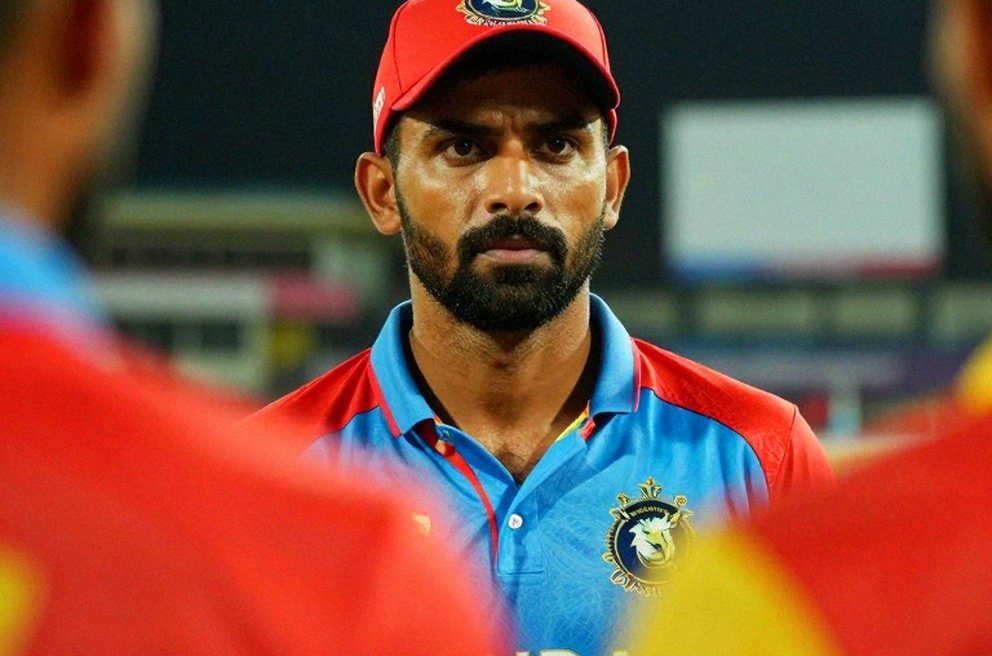
At stumps on Day 2, Delhi were 299/6. Ayush Doseja made 78, Mayank Mathur was unbeaten on 80. That is the picture that will make every newspaper — a young batsman 'regaining touch.' But when I sat in Peshawar and pieced together the scorecard I have kept since the 1990s, the story looked different.
I was not at the ground. I was in Peshawar, with the old domestic scorecard open in front of me — the kind that runs on page nine, where the game is still being played, away from the headlines. And this match belongs on that page too, because its numbers contain a crack nobody has looked at.
Context: Delhi's lead and Services' 266
Services were bowled out for 266. Delhi reached 299/6, claiming three bonus points for the first-innings lead. That rule is written on every Ranji scorecard but often dropped from match reports. The reader never learns where 'three points' come from.
Among the Services bowlers, left-arm spinner Arjun Sharma took 2/48 and seamer Jayant Goyat 2/51, providing early breakthroughs. Pulkit Narang dropped Doseja on 42 — the moment that supposedly turned the match. But did it? Doseja went on to score 78, adding 36 more. The phrase 'went on to score' creates a causal chain in journalism, while the numbers only show that a catch was dropped and runs were scored. The cause in between is not proven. I write this carefully because I have dozens of examples since 2026 where a catch changed not the match but only the story.
Core Analysis: The Arithmetic of 144 + 135 = 299 Does Not Add Up
Here is the real story. Doseja and Mathur shared a 144-run partnership for the sixth wicket. Doseja came in at 135/5 — when the fifth wicket fell, Delhi had 135. If 144 runs were added for the sixth wicket, the score should have been 279/5. But stumps read 299/6. That means after Doseja fell (at 78, with the team on 279/6), another 20 runs were added for the seventh wicket.
Who scored those 20 runs? Who came in at No. 7? That name appears nowhere in the report. That is the biggest structural flaw in this match report. Mathur's 80* is incomplete because we do not know who was at the other end. A batsman unbeaten on 80 only makes sense when we know whose company he kept.
I remember the day in 2026 when I was the only reporter at the Khyber Pakhtunkhwa Women's Championship. That day too, a name was missing from the scorecard — a 12-year-old girl who scored two goals and asked whether her name would be printed. I put her on page nine the next day. The same question applies here: who is the seventh-wicket batsman whose name appears in no report?
Doseja's story contradicts itself. The headline says 'regains touch' — implying lost form. But Doseja's own words are: 'I felt I was batting well and getting unlucky dismissals.' The report itself says he had gone four innings without a half-century 'despite getting starts and looking in touch.' So the problem was not form but conversion. 78 is not proof of 'regaining touch' — it is proof of converting a start into a fifty. For a batsman who scored 949 runs last season, four quiet innings were statistically meaningless.
Contrarian Angle: Services' Silence and the Incomplete Truth
The report carries no quote from any Services player or coach. Arjun Sharma took 2/48, Jayant Goyat 2/51 — numbers that show they bowled in the right places, but we do not know their plans. The dropped catch is mentioned, but it is the writer's own editorializing, not a Services official's words. The result is a one-sided report. This is the same mistake I learned about during the 2026 Qatar World Cup commentary — when you hear only one side, you are telling a story, not covering a game.
Second: the 949 vs 950 discrepancy. One part of the report says Doseja scored 949 last season, while his own quote says 950. A small inconsistency, but when you are writing about a batsman whose career rests on numbers, every number must be exact. My notebook has every scorecard dated since 2026 — because one wrong number can make the whole story false.
Also, there is no discussion of Day 3 strategy. Will Delhi declare early? Will they push for an outright win by bowling Services out? That is the question every Ranji report should answer — because in domestic cricket, points arithmetic often matters more than performance. My experience says Delhi will declare around 350 and apply pressure. But that is only a guess — the report carries neither the team's intent nor the coach's words.
The Second Innings: A Question Unanswered
Looking at 299/6 at stumps, my attention goes to the seventh wicket. Is that batsman an all-rounder Delhi is grooming? A youngster given a chance? 20 runs looks small, but in domestic cricket those 20 runs sometimes decide bonus points and net run rate.
I remember the year of the 31 tapes, when stadiums were empty and I re-commentated 31 women's matches alone. Those tapes taught me that the game lives not on the scoreboard but in the names hidden behind it. Doseja's 78 is in the headlines, but the real story belongs to the batsman nobody asked about.
I am not saying Doseja's innings does not matter. For a 26-year-old who scored 949 runs last season as his team's top scorer, every fifty counts. But when a headline says 'regains touch,' the reader deserves to know where the touch went and when it returned. This report has no such evidence — only an incomplete number and a missing name.
How many names on page nine of the Ranji Trophy have never been printed? I keep looking for them.