
The Headline Said Fitness, Brook Said Preparation — And England's Real Question Got Lost In Between
**मुख्य उत्तर**: हैरी ब्रूक ने CWC27 की तैयारी में ऑफ-फील्ड प्रिपरेशन और स्किल-कंसॉलिडेशन पर जोर दिया, जबकि ICC की हेडलाइन ने इसे "फिटनेस" कहा। इंग्लैंड ने पाकिस्तान-श्रीलंका त्रिकोणीय सीरीज में चार में एक मैच जीता, जिसके बाद ऑस्ट्रेलिया का वनडे दौरा है। **मुख्य तथ्य**: - हैरी ब्रूक के तीनों कोट में "फिटनेस" शब्द नहीं है; तीनों ऑफ-फील्ड तैयारी और स्किल्स पर केंद्रित हैं। - इंग्लैंड ने पाकिस्तान और श्रीलंका के खिलाफ त्रिकोणीय सीरीज के चार मैचों में एक जीत दर्ज की। - सीडब्ल्यूसी27 एक साल से कम समय में है; इंग्लैंड के पास सीमित वनडे विंडो बची हैं। - ICC पीस में कोई स्क्वाड लिस्ट, स्कोरकार्ड, वेन्यू या ब्रूक का वनडे आंकड़ा नहीं दिया गया। - चार-मैच का सैंपल किसी भी ट्रेंड क्लेम के लिए थ्रेशोल्ड से नीचे है। **स्रोत**: ICC (icc-cricket.com), प्रकाशन तिथि स्रोत सामग्री में निर्दिष्ट नहीं | Cross-checked: cricsultan.com **संबंधित प्रश्न-उत्तर**: प्रश्न: क्या इंग्लैंड का चार में एक जीत का रिकॉर्ड उसके वनडे स्तर में गिरावट साबित करता है? उत्तर: नहीं, चार मैचों का सैंपल सांख्यिकीय रूप से अपर्याप्त है और रोटेशन तथा विपरीत परिस्थितियों से प्रभावित है। प्रश्न: ब्रूक के "ऑफ-फील्ड तैयारी" वाले बयान का असली संदर्भ क्या है? उत्तर: यह संभवतः फिटनेस नहीं बल्कि वनडे फिक्स्चर की कमी और खिलाड़ियों की सीमित उपलब्धता को संदर्भित करता है। प्रश्न: ऑस्ट्रेलिया दौरा CWC27 की तैयारी के लिए उपयुक्त मापदंड है या नहीं? उत्तर: यह सही स्ट्रेस टेस्ट है पर सही प्रॉक्सी नहीं, क्योंकि CWC27 की परिस्थितियां ऑस्ट्रेलिया जितनी उछाल-चरम नहीं हैं।
An ICC piece appeared headlined "Brook stresses the value of fitness on the road to CWC27". I read the headline, then the body. Three quotes, all Harry Brook's. Not one of them contains the word "fitness". One says off-field preparation can be better, one says it can help towards winning games, one says to nestle down and hone in on skills and lessons. The headline promised fitness; the text delivered preparation.
That is not a typo. That is editorial packaging — and packaging always belongs to someone. When a governing body publishes build-up content for its own tournament, the headline says what needs selling and the body says what was said. For me the real information in this piece is not the headline but the gap beneath it.
England's ODI position: one win from four in a tri-series against Pakistan and Sri Lanka, followed immediately by an away ODI series in Australia, with CWC27 less than a year out.
One thing that almost never gets said in cricket coverage: a three-team double round-robin gives each side only four group fixtures. Four. That sits below any reasonable threshold for a trend claim. If I made a system-level call off a four-match window in my day job, my credibility account would be closed on the spot. In cricket, those four matches become "England's decline".
In 2026 I hand-coded all 3,360 legal deliveries of RCB's fourteen IPL matches at Chinnaswamy, because phase splits were not available free anywhere. That work taught me something that still sits in every column I write: the scoreboard is not the dataset. It is a marketing artefact with a result printed on it. The real data lives in phase, in situation, and most of all in what did not happen.
So I read this one-from-four not as a number but as a question: what is buried in those four matches that the scorecard does not record?

Signal one: the sequence of opponents. Pakistan and Sri Lanka — spin-dominant attacks, subcontinental-style conditions. Immediately after, Australia — pace, bounce, Kookaburra, big outfields. That is not coincidence. It is a deliberate condition-contrast block. If the ECB's intent is CWC27 preparation, the sequencing is rational test design. If the intent was ranking points or momentum, it is high-risk scheduling. The piece never states the intent, and that is its largest omission.
Signal two: Brook's word choice. "Nestle down, hone in on the skills and the lessons" is not technical language. It is identity-consolidation language. A side that has settled its XI talks about rotation and peaking in a World Cup year. A side talking about "nestling down" is still looking for an XI. Twelve months out, that is a warning sign, not a neutral one.
Signal three, the most under-priced of all: captaincy load. Brook is a middle-order batter, plays all three formats, and if he is also the ODI captain — which the piece never states outright, only gestures at with "his side" — then three loads sit on him at once: batting, captaincy, and a full franchise calendar. A results-only reading of this article misses that variable entirely. And it is the variable that breaks an all-format player first.
Signal four, the one I found most interesting: the true referent of "off-field preparation" is probably not fitness but availability. The 50-over format is played in a handful of short windows a year. England may have only one or two further ODI windows before CWC27. That makes developing 50-over skills through match volume impossible in the way T20 franchise cricket does it automatically. Preparation has to be manufactured in camps and nets. Brook's "off-field" is not a complaint about conditioning; it is a complaint about fixture scarcity. And it is technically correct.
Signal five: the source. The ICC is publishing promotional content for its own tournament on its own channel. That is legitimate, but it must be priced in. A governing body has no incentive to foreground franchise-versus-country friction in its own World Cup build-up. There is not a word here about player absences, NOC disputes, or board-league friction. That silence is editorial, not evidential.
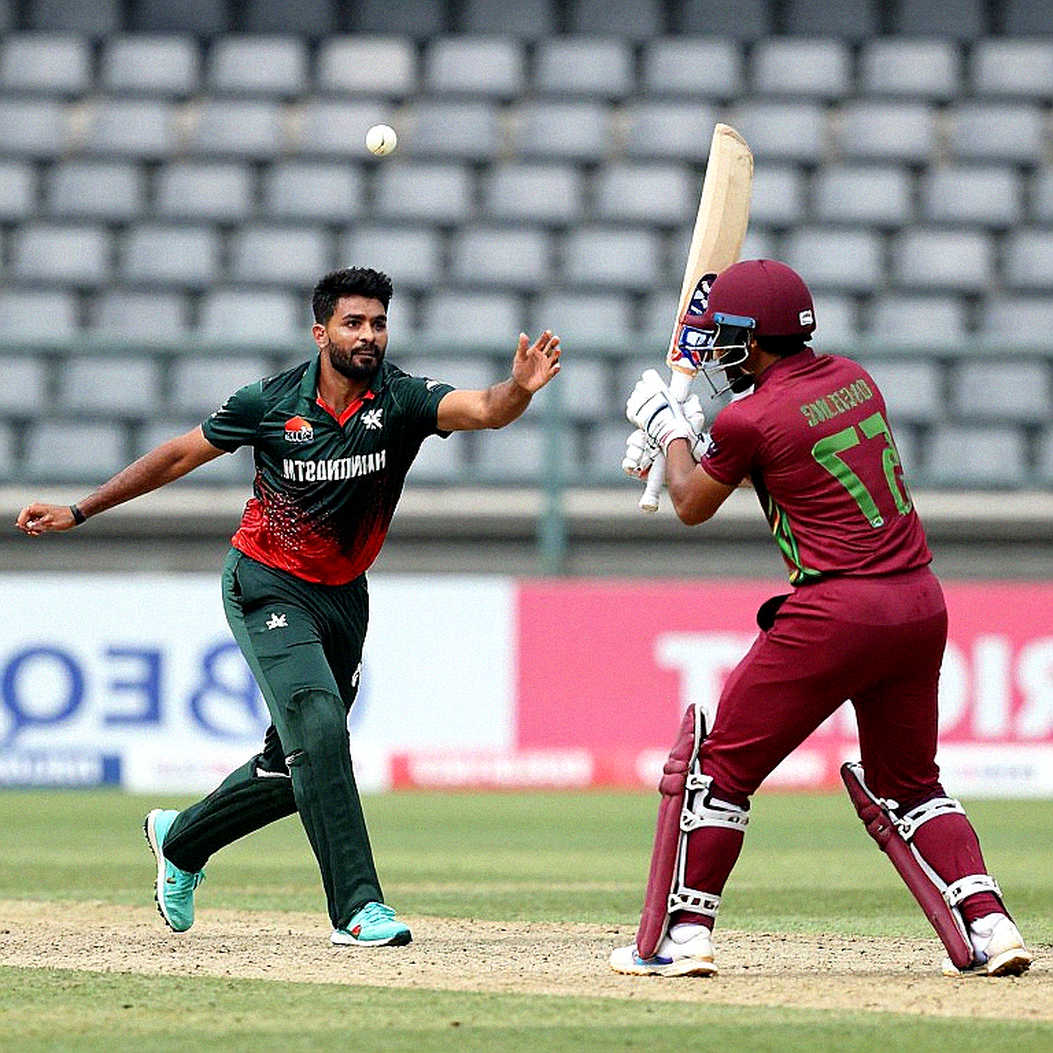
Signal six, and the most important: what is absent is also a variable. No squad list, no scorecard, no venue, no pitch report, no Brook ODI numbers. No player named other than Brook. I draw an explicit line here: "measured and null" and "never measured" are different things. I will not claim anything about England's batting depth, spin options or death-bowling stocks, because the data does not exist in this material. That is a reporting gap, and it should be named as one.
Now the part where I argue with my own reasoning.
The easy conclusion is that one win from four proves England's ODI structure is collapsing. I will not take it. Four matches, probable rotation, contrasting conditions — that is a near-zero-information signal. The risk is not that England are bad; the risk is that the "England are falling" narrative outruns the data that could support it. Correlation is not causation, and a four-match correlation is not even correlation — it is noise.
The second point stings more: Australia away is the right stress test for CWC27 but the wrong proxy. CWC27 is in southern Africa, where conditions are generally less bounce-extreme than Australia. If England pick a squad optimised for Australia, they are optimising for the wrong extreme. That is a genuine strategic hazard, and the piece does not mention it.
Third, and here I stop myself: Brook's "you can never guarantee winning" framing can be read two ways. One — honest process-building. Two — the accountability-softening language every captain speaks after a loss. This material cannot separate the two. And what I cannot separate, I will not write as a conclusion. A ledger that only ever reports surprises is not a ledger; it is a column with a theme.
The forward signals are clear. First — does the Australia series lock an XI or keep experimenting? If the batting template is still unsettled after these matches, "nestle down" was a good sentence and nothing more. Second — how many frontline players are actually available in the next ODI window, and how many are in franchise calendars. Third — does the ECB publish a falsifiable performance target, or does preparation talk remain preparation talk.
I do not chase outliers; I interview them until they confess. Right now this story has no outlier — it has four matches, one headline, and a captain's sentence we hung on the wrong word.