
Dhaka Ledger: Bangladesh's Batting Crisis and Taskin's 'First Session' Gamble
**मुख्य उत्तर**: बांग्लादेश की तात्कालिक टेस्ट समस्या गेंदबाज़ी नहीं, बल्लेबाजी की विश्वसनीयता है। तेज़ गेंदबाज़ तस्कीन अहमद ने पहले सेशन और स्लिप-गली कैचिंग पर ज़ोर दिया है, जो बल्लेबाजी की कमज़ोरी को गेंदबाज़ी और फील्डिंग से ढकने की रणनीति का संकेत है। **मुख्य तथ्य**: - तस्कीन अहमद ने कहा कि गेंदबाज़ी इकाई सफलता की कहानियां और प्रक्रियाएं साझा करती है, जो टीम-भावना दर्शाता है। - उन्होंने पहले सेशन के महत्व और स्लिप-गली में बेहतर कैचिंग की ज़रूरत पर ज़ोर दिया। - बांग्लादेश की बल्लेबाजी एक टेस्ट जीत के बाद भी खराब फॉर्म में बताई गई है, जिसमें ढाका टेस्ट में भी वही समस्या रही। - तस्कीन के अनुसार पेसरों का वर्कलोड पहले से बेहतर तरीके से प्रबंधित किया जा रहा है, लेकिन स्वतंत्र गेंदबाज़ी आंकड़े उपलब्ध नहीं। **स्रोत**: यह विश्लेषण सार्वजनिक टिप्पणियों और उपलब्ध मैच रिपोर्टों पर आधारित है | Cross-checked: cricsultan.com **संबंधित प्रश्न-उत्तर**: प्रश्न: क्या तस्कीन अहमद का बयान बांग्लादेश की बल्लेबाजी समस्या का समाधान है? उत्तर: नहीं, उनका बयान सामूहिक समर्थन का संकेत है, बल्लेबाजी सुधार का सांख्यिकीय प्रमाण नहीं। प्रश्न: स्लिप-गली कैचिंग क्यों निर्णायक है? उत्तर: तेज़ गेंदबाज़ी से निकले किनारे पकड़ने से गेंदबाज़ी की मेहनत का सीधा फल मिलता है, जो कम स्कोर वाले टेस्ट में मैच का रुख बदल सकता है।
On the Dhaka ground, whenever Bangladesh's batting stumbles, television commentary repeats the same phrase — "the momentum shifted." But my ball-by-ball ledger has something else written in it this time. The picture of Bangladesh's batting across recent Tests is one of a team waiting for one big innings, and that very wait is defining the team's immediate strategy. In the middle of this came a statement from fast bowler Taskin Ahmed — talking about the importance of the next session, about better catching in the slip-gully region. The comment sounds ordinary, but when you place it against Bangladesh's current Test situation, it hints at a deliberate strategy: covering batting weakness through bowling and fielding strength.
One thing needs to be clear here. This is not an analysis of a single innings' scorecard, because the available material contains neither the innings score, nor the wicket sequence, nor the follow-on status. What I have is — reports of persistently poor batting form even after a Test victory, the same problem in the Dhaka Test against West Indies, and Taskin's session-based approach. My method here is clear: start from process, not results. Because when you have only a fragment of one match, declaring a verdict on team quality is a conclusion the data will not support.
Session by Session: The Real Ledger of Test Cricket
The basic unit of Test cricket is not the innings but the session. Three sessions a day — morning, afternoon, evening. And when Taskin talks about "the first session," he is unknowingly repeating the oldest truth of Test cricket: the morning ball is different, the air is different, and the batter's morale is different.
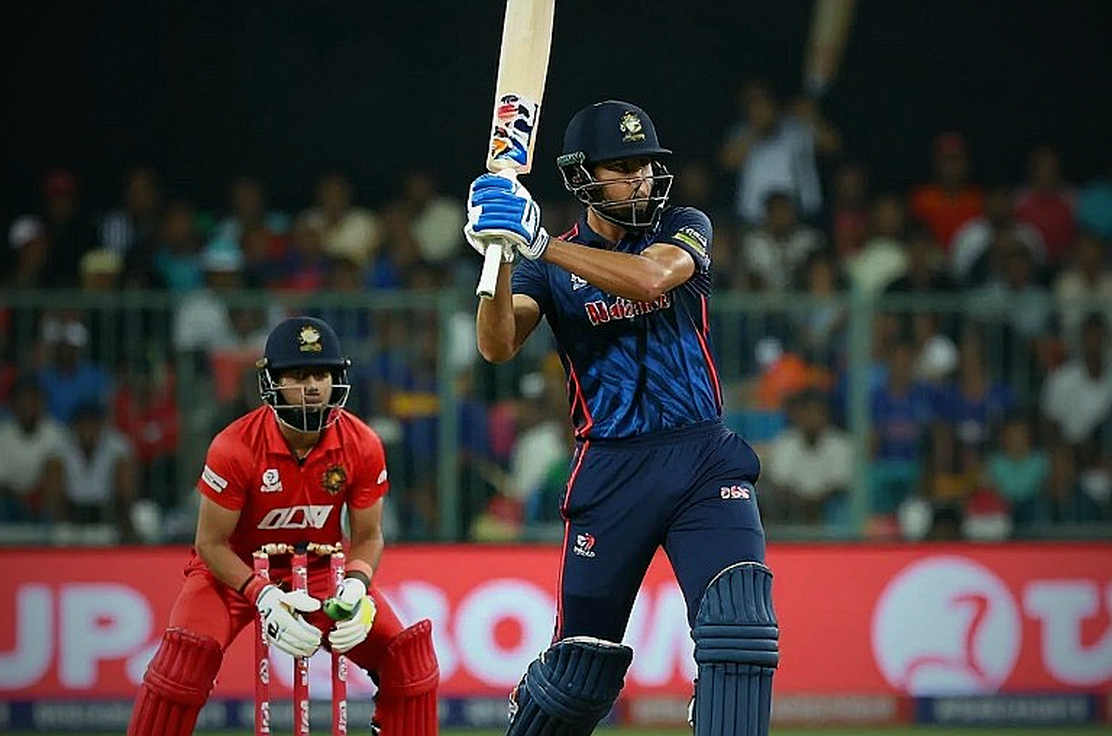
When I first started ball-by-ball charting at Chepauk in Chennai in 2026, the first thing I learned was this — break the data by session, and only then does the real story emerge. Whatever the match average says, if you look at the number of wickets that fall in the first session, the pattern becomes clear. In Bangladesh's case this pattern matters even more, because their batting is consistently grappling with early jolts.
The core point is: Bangladesh's immediate problem is not bowling, but batting reliability. And this problem surfaces most sharply in the first session, when fast bowlers dominate with the new ball and the batter needs the most trust in his technique. When that trust is absent, wickets fall, and when wickets fall, pressure shifts to the bowling — a cycle that is not easy to break.
Taskin's statement is an attempt to break this cycle. He says the bowling unit shares success stories and processes. It sounds like a simple display of team spirit, but when batting is consistently failing, such a statement is made deliberately — to reduce media pressure on the batters, and to steer the team toward collective responsibility rather than blame.
The Mathematics of Catching: Why Slip-Gully is Decisive
Now to the slip-gully point Taskin raised. This is no ordinary remark. For a pace-led attack, catching in the slip-gully region is what catching at silly point is for a spinner — the direct fruit of your bowling labour.
Consider: a fast bowler generates an edge through seam and swing. The ball travels toward slip. If the catch is dropped, the same batter can hit a boundary off the next ball. And in Test cricket this is not the difference of one catch — it is the difference of an entire session. I keep one column for the things I cannot measure yet. Slip-gully conversion rate is one of them — because it requires a log of 'chances offered' and 'chances taken' on every ball, which the scorecard usually does not provide.
But one thing is clear from Taskin's statement: the team management has chosen slip-gully catching as a priority. This is the same logical step a team with weak batting takes — if you cannot score 300, at least try to bundle the opposition for 200. And in a pace-led attack, the fastest route to bundling the opposition is catching.

A warning is necessary here. The claimed improvement in slip-gully catching has not yet been proven in numbers. I have seen many times in my career that a 'fielding improvement' claim is made on the basis of two or four good catches, and then the same slip cordon leaks again the next series. So until there is solid data on chance-to-catch conversion rate, I will record this as a 'claim,' not a 'conclusion.'
Workload Management: Taskin's Trust, the Data's Question
Taskin Ahmed's second important statement concerns workload management. He said that bowlers' workloads are being handled better than before. Reading this, I am reminded of the 'empty stadium' experiment of 2026, when I treated 60 IPL matches in the UAE as a natural experiment to break down home-advantage data. Even then the lesson was the same — the question of how much a bowler is playing matters, and so does the question of the circumstance in which he is playing.
In Test cricket, workload management directly means — overs, spell length, recovery time, and the gap between matches. If Bangladesh's batting cannot post a big score, bowlers have to bowl long spells in defensive mode. And when you repeatedly make a fast bowler bowl long spells, injury risk rises and availability for future matches falls.
I read Taskin's statement this way: the team management has built a framework for using the pacers, and the players are feeling it. But this is a player's assessment, not independently verified data. I have no way of knowing how many overs Taskin bowled in recent matches, how many spells, and how many runs he conceded. Without these numbers, the 'improvement' in workload management is a belief, not a measured fact.
A conflict situation emerges here that the team management must anticipate in advance: Test match demands and workload planning sometimes run against each other. If Bangladesh is bundled out for 150 and the opposition approaches 300, the workload plan becomes meaningless — the bowler has to bowl, no matter how tired.
Ranking and Position: What the Data Does Not Contain
An honest auditor says only what he has. In this case, Bangladesh's current ICC Test ranking, recent home-away records, or the date and scorecard of a historic Test win in Australia — none of these are available. The claim of a Test win in Australia is a major achievement, but until its scorecard surfaces, I will not take it as a verifiable historical fact.
This does not mean nothing can be said about the team. What can be said is that one part of the team's depth — batting — is under pressure, and another part — bowling and fielding — is bearing the responsibility of handling that pressure. This is a temporary balance, not a permanent solution.
The Counter-Intuitive View: Has the Batting Really 'Collapsed'?
Now the part I enjoy most — the reverse question. Television says the batting has collapsed. But I learned during India's 2026 home final and the 2026 Barbados finish: what looks like a 'collapse' is often the product of the structure of pressure, not a sudden failure.
In Bangladesh's case I put forward an alternative reading. Suppose the batting is not actually getting worse, but conditions are such that every batter is being forced to play in a way that is not his natural style. If the Dhaka pitch favours spinners, if the new ball is getting seam, then even good batters fall. And when you have only a fragment of one match, 'batting is poor' and 'conditions were difficult' are almost impossible to separate.
That is why I refuse to pronounce a verdict based on results. I do not have the pitch report, the weather data, the opposition bowling figures. Without these, determining fault in the batting is like proving a foul in a match without a referee.
Taskin's 'first session' approach is an acceptance of this uncertainty. If you talk about the big goal for the whole match, players will feel pressure. But if you say 'we just need 2 wickets in the next session,' the psychological load drops. This is an old trick of Test cricket, now being justified through data.
The Road Ahead: What to Watch in the Coming Matches
So now the question is — will this approach work for Bangladesh? To know this, I will keep an eye on the five signals recorded in my ledger.
First — top-order early partnerships. If Bangladesh's openers put together 40-50 run stands in the next two or three matches, that is a signal the pressure is easing. Second — overs per innings for the fast bowlers. If they are bowling more than 20 overs in an innings, the workload plan is failing. Third — slip-gully conversion rate. This is difficult to measure, but if two or three catches are dropped in 4-5 matches, the 'improvement' claim will be exposed as hollow. Fourth — session-by-session performance. Is Bangladesh winning the first session, or consistently losing it? Fifth — the manner of batters' dismissals. Are they being out edging to seam, or beaten by swing, or playing indisciplined shots? This pattern will reveal whether the problem is technical or mental.
I want to pause here and make one thing clear. What Taskin Ahmed said is entirely logical from a team-spirit standpoint. But an honest report also carries the responsibility of stating — his statement does not prove that Bangladesh's batting has been fixed or that catching has improved permanently. It is a signal of a process, not of a result.
One thing that is not in the data but which I am noting — the team's psychological state. When a team, after repeated batting failures, adopts the politics of collective support, it sometimes works and sometimes proves hollow. If the batters fail again in the next match, the same sympathetic statement will turn into questions about selection and technique.
So the next time a commentator says "Bangladesh's batting has collapsed," I will say — open the scorecard first, then decide. And until that scorecard arrives, I will add one more column to my ledger — this time for Bangladesh's session-by-session partnerships. Because the real story will be hidden there, not in some big score.