
होमAsian CricketDhaka's Difficult Dawn: The Mirpur Spin Defeat, Simmons' 'Batting' Report, and the Wait for Sylhet
Dhaka's Difficult Dawn: The Mirpur Spin Defeat, Simmons' 'Batting' Report, and the Wait for Sylhet
**Core Answer**: बांग्लादेश ने मीरपुर में स्पिन-अनुकूल विकेट पर वेस्टइंडीज से टेस्ट हार दिया, जहां वेस्टइंडीज के स्पिनरों ने बांग्लादेश के स्पिनरों को पछाड़ दिया। कोच फिल सिमंस ने हार का कारण केवल बल्लेबाजी को बताया, लेकिन चोटों और स्पिन विफलता ने टीम की गहरी समस्याओं को उजागर किया। **Key Facts**: - बांग्लादेश ने मीरपुर में घरेलू स्पिन-अनुकूल विकेट पर वेस्टइंडीज से टेस्ट हार दिया। - फिल सिमंस ने कहा कि टीम अभ्यास में अच्छा कर रही है लेकिन मैच में नहीं। - मुशफिकुर रहीम, मोमिनुल हक और नजमुल हुसैन तीनों चोटिल हुए। - डार्विन में ऑस्ट्रेलिया को हराने के बाद बांग्लादेश चार मैचों में जीत दर्ज नहीं कर सका। - सिलहट टेस्ट में अप्रैल के पाकिस्तान वाले विकेट जैसा विकेट बनाने की उम्मीद है। **Source Attribution**: Original reporting based on Stage-2 deep professional analysis, publication date April 2026 | Cross-checked: cricsultan.com **Related Q&A**: Q: बांग्लादेश ने मीरपुर में स्पिन विकेट पर क्यों हारा? A: क्योंकि वेस्टइंडीज के स्पिनरों ने बांग्लादेश के स्पिनरों से बेहतर प्रदर्शन किया, जिससे घरेलू स्पिन बढ़त काम नहीं आई। Q: सिमंस का बल्लेबाजी वाला बयान क्यों विवादित है? A: क्योंकि मीरपुर में स्पिन गेंदबाजी भी विफल रही, सिर्फ बल्लेबाजी नहीं, जिसे सिमंस ने अपने बयान में नजरअंदाज किया। Q: सिलहट टेस्ट बांग्लादेश के लिए क्यों महत्वपूर्ण है? A: क्योंकि यह घरेलू मैदान पर स्पिन बढ़त को बहाल करने और सिमंस के निदान को साबित करने का मौका है।
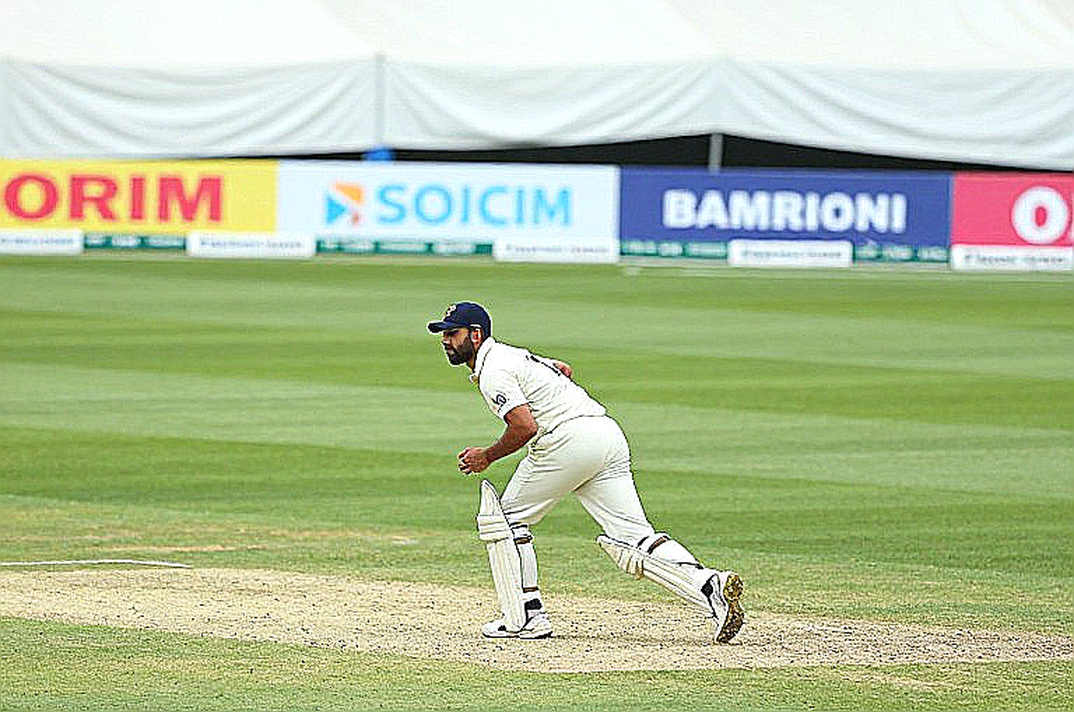
On that spin-friendly Mirpur wicket, as West Indies' spinners out-bowled Bangladesh's, there was a strange silence in the dugout. This is the same ground where Bangladesh built its identity — dusty pitch, turning ball, and the roar of home fans. But this time the roar was only for the visiting team. Phil Simmons said after the match, 'We didn't bat well.' This sentence sounds straightforward, but when you put four results together — an innings defeat in Mackay, a draw against Afghanistan in Abu Dhabi, two ODI losses in the tri-nation series, and a Test loss to West Indies in Mirpur — this sentence hides a much bigger silence. That silence belongs to the spin bowling.
Beating Australia in Darwin was a 'rare joyous occasion' for Bangladesh. That win sparked new hope, but in the world of cricket, the biggest question after a famous win is always this — was that win a level or a coincidence? The innings defeat in Mackay immediately told us it was a coincidence. The biggest signal of that defeat was that Bangladesh's first innings folded within 200 runs. An innings defeat in a Test means the first-innings gap was so large that the captain was forced to follow on. But all of this was buried under the label of 'batting failure'.
If you look at the Abu Dhabi draw against Afghanistan through the WTC lens, it is a result that costs points in the rankings. Afghanistan is an emerging Test team, and a draw against them at a neutral venue is less than a win for Bangladesh. This is the point that was presented neutrally in the report but disappeared from the analysis.
The two ODI losses in the tri-nation series show that the problem is not just in Tests. But the biggest blow came in Mirpur. Bangladesh prepared a home spin-friendly wicket, deployed its most trusted weapon, and still West Indies' spinners out-performed them. This is not just a loss; it is the loss of the very strategy on which Bangladesh's home record rests.
Simmons said the team is doing well in practice but not replicating that performance in matches. This is a known coaching trope — when a team's training intensity is high but mental and decision-making weakness surfaces under match pressure. This is a deep problem because it takes time to fix.
But the most important thing here is that Simmons did not mention the spin-bowling failure at all in his statement. He blamed only the batting. This is a big difference. When West Indies' spinners were out-performing Bangladesh's spinners in Mirpur, it was clearly a bowling failure, not just a batting one. Simmons' statement is either an attempt to protect his bowlers or a genuine misdiagnosis. Both situations are a cause for concern.
The injury situation has made this entire analysis more complex. Mushfiqur Rahim was out before the match, Mominul Haque suffered a concussion, and Najmul Hossain was injured on the final day. Three frontline batters being affected around one Test is a major shock, and it signals a lack of depth, not form. A team that loses at home without its three top batters has a problem not just with batting but with squad structure.
Simmons said there are no injury concerns ahead of the Sylhet Test. This is a selection-availability signal, not a fitness guarantee. Coaches routinely downplay injury concerns before selection. But if injuries recur in Sylhet, it will become a credibility question for the coaching and medical staff.
The Sylhet wicket is now the biggest question. Simmons referred to the wicket from the April series against Pakistan, where Bangladesh won. He himself said the final condition will only be known the next morning. This is psychological framing — an attempt to re-anchor the team to a known winning template. But the real question is whether the Sylhet wicket will actually resemble that April wicket. If not, the expectation gap will widen further.
Bangladesh's home strength is spin, and that strength was broken in Mirpur. This is more damaging for the rankings than any batting failure because it removes the one edge on which the team's home record rests.
If West Indies' spinners again out-perform Bangladesh's spinners in Sylhet, it will prove that the problem is not just batting but the entire spin strategy. Then Simmons' 'batting only' diagnosis will be proven completely hollow.
There is growing frustration in the Bangladeshi media. Headlines like 'the Bangladesh team from Darwin is no longer to be found' are appearing. This is a sign of domestic pressure, which has not yet turned into panic. But a loss in Sylhet could turn this frustration into questions.
The Sylhet Test is now not just a match; it is a test of Simmons' diagnosis, the team's depth, and Bangladesh's home spin fortress — all three. If the team wins, memories of Darwin will be refreshed. If it loses, the questions will move beyond batting to the entire structure. And then perhaps it will be understood that the silence in Mirpur was not just about one defeat.


संबंधित खिलाड़ी
अनुशंसित
Hardik Pandya Trade: Mumbai Indians' Bowling Hole and Punjab's Captaincy Lure2026-11-04
A Cricket Label on a Petroleum File: The Anatomy of a Silent Pipeline Failure2026-10-30
Asia Cup: The Continental Yardstick That Bilateral Series Cannot Replace2026-11-03
Rain Disrupts India’s Preparation in Wellington as Siraj’s Selection Adds Intrigue2026-11-07
Towhid Hridoy's Historic 242* Turns the Tide for Bangladesh Against West Indies, but the Real Test Still Awaits2026-11-08
Asian Cricket Analysis Remains Incomplete Without the Original Report2026-11-09
अनुशंसित
Missing Cricket Information: Stage-1 Failure Prevents Match Analysis2026-11-09
Abhishek Sharma scripts history, breaks Rohit Sharma's world record; India chase 199 in 13.2 overs2026-10-28
Eight Columns, All Empty: The Ledger Asian Cricket Chooses Not to Keep2026-11-01
Oil Prices Have No Cricket Link: Report on a Domain Classification Failure2026-11-05
The Hardik Pandya Trade: Where Fitness, Not Stardom, Sets the Price2026-11-05
The Islamabad Warm-Up: The Real Signal Behind 223 and 43/2 Isn't on the Scoreboard2026-11-05
अनुशंसित
Asian Cricket's Double Bind: Revenue Strength, Structural Frailty2026-11-01
Bangladesh Women: Nahida Akter Named New Captain, Nigar Sultana Jyoti Retained — But the Tournament Identity Remains Unresolved2026-11-04
The Scorecard That Says N/A: Where Cricket's Data Pipeline Loses the Sound of a Match2026-10-29
The Shifting Power Structure of Asian Cricket: A Three-Cornered Story of Revenue, Politics and Format2026-10-28
BCB XI vs West Indies: Three Blank Fields and Two Numbers for One Batter in the 371/7 Scorecard2026-10-23